Opening a Collection to the World: A Digital Platform for the RISD Museum
The RISD Museum decided to put its entire collection online — all 100,000 objects, with Creative Commons licensing that lets visitors download and repurpose images of public-domain works. We built the platform that makes that decision real — and that expands who the institution reaches from visitors to the whole world of people who will never make the trip.
The work
The Challenge: The Museum Changed Its Mind About What a Collection Is For
The RISD Museum decided to put all 100,000 objects online, with public-domain works released under Creative Commons licensing that lets anyone download and reuse them — a structural reframing of what a museum is for, sitting on a platform that presented 13% of the collection and had no route to the rest.
The Strategy: Build the Open-Collection Decision, Not a Website
Rebuilt on Drupal around the open-collection decision at institutional scale, rather than redesigning a website.
- MuseumPlus stays the system of record. An API moves object, artist and exhibition data continuously, with daily synchronization and manual overrides where automatic sync is not appropriate.
- The architecture absorbs the collection as it opens. New objects reach the public site without re-engineering, so opening 100,000 works over time stays survivable.
- The digital presence answers its own questions. Built on a position about what a museum’s online relationship is for, rather than assembled from default museum-website assumptions.
The Outcomes: From 13% Visible to Most of It, Downloadable
A collection that was 13% visible is now mostly public, and the part of it in the public domain is free to take and use.
- Engagement | 85,948 works online, up from about 13,000 | Records the museum keeps revising, because curatorial edits reach the site on their own
- Growth | Sessions per user and pages per session up, bounce rate down | Public-domain images downloadable and reusable for any purpose, by anyone
The detail
Why it mattered
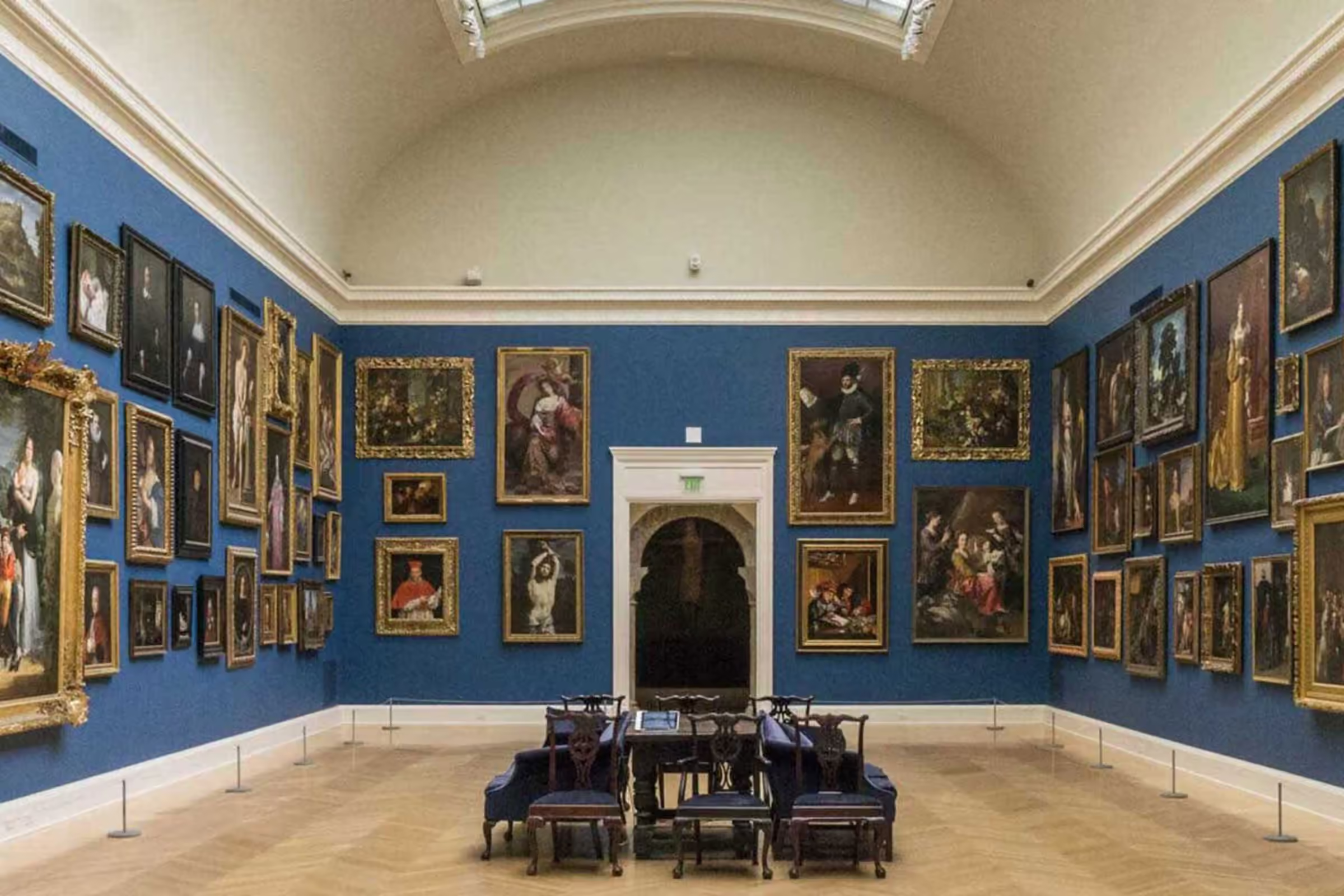
- Most of the collection was invisible unless you came to Providence. About 13,000 of 100,000 objects were online — roughly 13%. For the 20th largest art museum in the United States, the audience boundary was essentially geographic: researchers, students, educators and makers who could not travel to Rhode Island could not meaningfully engage with most of what the museum holds.
- The platform had no path from 13% to all of it. Adding objects, maintaining metadata, and managing the relationship between collection records and editorial content were not sustainable at the volume the open-collection strategy implied. Getting there meant rebuilding the architecture, not extending it.
- The collection system and the website were not properly joined. MuseumPlus is the source of truth for object records, artists, exhibitions and provenance. The site needed deep, continuous integration with it while leaving it the system of record, and the previous architecture could not support that at the depth or reliability required.
- The experience was built around a visit, not a relationship. Underneath the architecture sat harder questions. What is a physical institution collecting physical objects for in a digital world? What does someone want from a museum in an interactive space? Can a museum be more relaxed about how people interpret the work? The old platform answered those by default; the new one had to answer them on purpose.
How it was built
- MuseumPlus stays the system of record. An API handles the exchange between the two systems, with daily synchronization keeping public object data current as records evolve, and manual overrides where automatic sync is not appropriate. Curatorial work done in MuseumPlus is structurally connected to what a visitor sees.
- The architecture absorbs the collection as it opens. New objects arrive on the public site without re-engineering — the property that makes a decision to open 100,000 works over time survivable rather than a permanent project.
- A rebuild, because the institution had changed its mind about itself. Patching the existing platform would have produced a digital surface still built to the museum’s previous self-conception — a vault granting access selectively rather than a collection contributing back to the culture it came from.
- An interface that gets out of the artwork’s way. Gray and white wireframes evolved into a black-and-white interface that keeps information clear while the color belongs to the art. The site’s language was simplified and tested for clarity, and a vocabulary of time — Soon, Upcoming, Now, Ongoing, Past — keeps the visitor grounded in the idea of a physical visit even when they will never make one.
- A homepage that is a doorway, not an index. The homepage opens with four videos — a cinematic exterior and three interiors exploring the main sections of the navigation — so choosing a path takes the visitor inside the building rather than assuming they want to see everything and pick. The museum brought its own design aesthetic to the wireframes and redeveloped its voice; strategy, architecture, user testing and engineering were ours.
What it opened
- 85,948 works online, against about 13,000 before. The museum’s own collection page reports the figure and keeps it current. Two thousand one hundred objects are on view in the building; the rest of the relationship with this collection now happens somewhere else.
- Downloadable is a filter, not a policy page. Public-domain works are released under Creative Commons licensing that permits download and reuse for any purpose, and a visitor can filter the collection by it — the switch that turns an institutional position into something a person can act on.
- The records are living documents. The museum describes them as frequently revised and enhanced, which is only true because curatorial edits in MuseumPlus reach the public site on their own.
- Visits got longer and faster at the same time. Sessions per user and pages per session rose while bounce rate fell, and Acquia hosting brought page load, server response and download times all down — a site with more in it, moving quicker.
- A shelf of 2019 recognition. A Webby nomination for Best Visual Design, SCA Summit International Gold, two W3 Silvers for user experience and visual appeal, Communicator honors for interface and cultural institutions, a Web Award for Outstanding Website and two Davey Silvers — one of them for the use of video the homepage is built on.
News & Recognition
- April 2020
RAID the Icebox Now is a Webby nominee
Nominated in General Websites — Art, for the digital publication of a RISD Museum exhibition series that let artists loose in the collection store.
- April 2020
The RISD Museum site takes an Awwwards Honorable Mention
Awwwards recognized the museum’s platform in April 2020, crediting Oomph as creative agency.
- October 2019
The RISD Museum site wins nine awards
A Webby nomination, a Summit Gold, two W3 Silvers, two Davey Silvers, a WebAward and two Communicator honors — for a museum platform whose code was published for anyone to use.
Museum collection platform questions
What does open access mean for a museum collection?
At the RISD Museum, it means all 100,000 objects heading online, with public-domain works released under Creative Commons licensing that lets anyone download and reuse high-resolution images. And it means “Downloadable” is a filter a visitor can apply — the switch that turns an institutional position into something a person can act on.
How does a museum website stay in sync with its collection system?
By leaving the collection system in charge. MuseumPlus stays the source of truth for objects, artists and exhibitions; an API exchanges data continuously, daily synchronization keeps public records current, and manual overrides exist where automatic sync is not appropriate — so curatorial edits reach the public site on their own.
How should a museum website treat design?
As a structural backdrop. The interface is black and white so the color belongs to the artwork, the site’s language was simplified and tested for clarity, and a vocabulary of time — Soon, Upcoming, Now, Ongoing, Past — keeps visitors grounded in the physical museum even when they are an ocean away from it.
What kind of engagement do museums get from putting collections online?
For the RISD Museum platform by Pare & Co: 85,948 works online against roughly 13,000 before, sessions per user and pages per session up with bounce rate down, faster page loads on Acquia hosting — and a 2019 awards shelf that includes a Webby nomination, SCA Gold, two W3 Silvers and two Davey Silvers.
Client leadership

Jack Hartman
Jack Hartman’s specialty is cultural and destination platforms. He has led collection publishing that puts a museum’s holdings in front of people who will never visit.