MuseumPlus Integration for Online Collections
The system of record stays the system of record.
MuseumPlus is zetcom’s collection management system — the source of truth for objects, artists, exhibitions and provenance. Getting that collection onto the web without the website becoming a second, drifting copy of it is an integration problem before it is a design one.
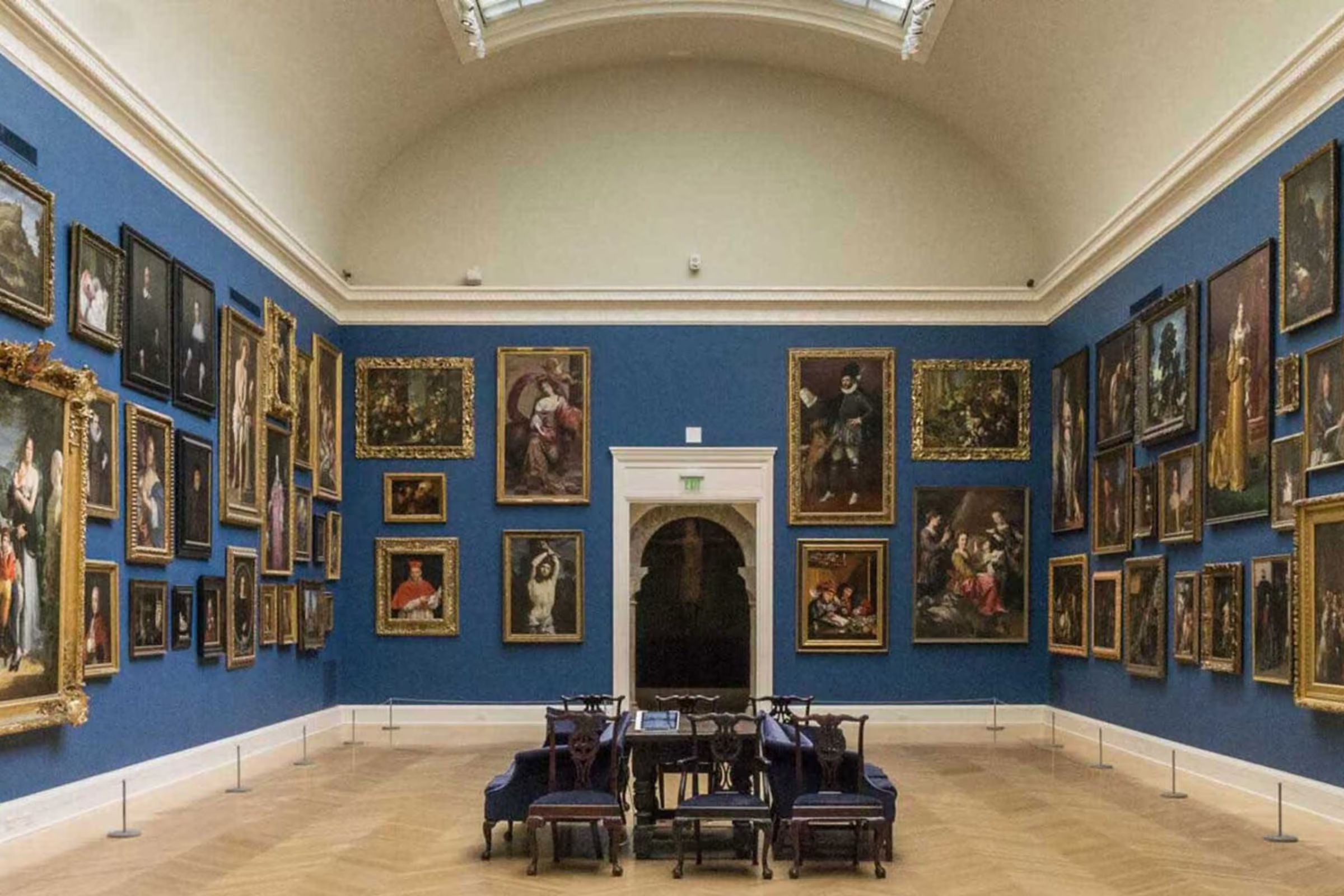
The RISD Museum’s platform runs on a MuseumPlus integration built for all 100,000 objects in the collection — synchronized daily, with MuseumPlus unchanged as the system of record, at the 20th largest art museum in the United States.
MuseumPlus holds the institutional record; the open question is how much of it reaches the public. Most museums publish a fraction of what they hold, and the fraction is usually set by how much manual work publishing costs rather than by any curatorial decision. That is the tell. When the website is a separate store that someone fills by hand, the collection online is whatever the staff had time for, it ages the moment cataloguing moves on, and expanding it is a proportional increase in labour — so it never expands. The alternative is not a bigger import. It is an architecture where MuseumPlus keeps its job as the institutional record, the public platform keeps its job as the place people encounter the collection, and a synchronization layer means curatorial work reaches the visitor without anyone retyping it. Get that right and the number of objects online stops being a budget line and becomes a policy decision.
Our Work with MuseumPlus
How the Work Splits
The institutional record — object records, artist and maker authority data, exhibition and provenance history, media, and the cataloguing workflow curatorial and registrarial staff already work in every day, with an API to read it out of.
The public platform and the integration beneath it — a content model that holds catalogue records and editorial writing in one system, scheduled synchronization that keeps published objects current as records change, curatorial override for the fields a person should decide, image derivatives and rights handling for open licensing, accessibility as a condition rather than a pass at the end, and search and browse built for a visitor rather than for retrieval.
A collection the institution can open as far as it decides to. At the RISD Museum, MuseumPlus remains the source of truth for objects, artists and exhibitions while an API and daily synchronization jobs move that data to a public Drupal platform — with manual override where automation is inappropriate. The museum went from roughly 13,000 objects online to infrastructure built for all 100,000, with public-domain works released under Creative Commons licensing that lets anyone download and reuse them. The platform took nine awards in 2019 and an Awwwards Honorable Mention in 2020, and its code was published open source.
The work in practice
A museum that has bought MuseumPlus has already solved the hard institutional problem: there is one place where an object record lives, one cataloguing workflow, and one answer to what the collection contains. The web question is what happens to that record on the way to a person who will never see the inside of the building.
What the integration has to do
Leave MuseumPlus alone. The collection management system is where registrars, curators and cataloguers work, and the public website is not a good reason to change how they do it. A public platform that requires curatorial staff to maintain a second record has already failed; it will be abandoned quietly, and the site will drift.
Run on a schedule, not on a person. Synchronization that happens because someone remembers to run it is the same as no synchronization within about a year. Scheduled jobs that pull object, artist and exhibition data on a fixed cadence mean the published collection tracks the catalogue by default.
Allow override without breaking sync. Automated synchronization is right most of the time and wrong in specific, predictable places — a sensitive provenance note, an image the museum has rights to hold but not to publish, a label written for a gallery wall that reads badly on a screen. The architecture needs a way for the museum to intervene on a single field without the next sync overwriting the decision.
Rights that reach the pixel. Open licensing is a claim about specific objects, and it has to survive the trip from a rights field in the record to the download button under an image. Getting that wrong in either direction is serious: a restricted work offered for download, or a public-domain work locked behind a viewer that will not release it.
Absorb growth without reengineering. The whole point of doing this properly is that opening more of the collection becomes a decision the museum makes rather than a project it funds. If going from 20% to 60% means another integration engagement, the architecture has quietly set the institution’s access policy for it.
The question that decides the architecture
Every museum with a collection management system reaches the same fork: publish through the vendor’s own web module, or build a platform against the API.
The vendor route is faster and it is the right answer more often than agencies like to admit — if the collection is the site, and the site is a catalogue, eMuseum will do the job with a fraction of the work. It stops being the right answer when the collection has to sit inside an institution’s wider digital presence: exhibitions, visit information, editorial, learning resources, a membership relationship, a brand the museum has spent years on. At that point a separate catalogue application beside the website means two content models, two search indexes, two design systems and two sets of accessibility obligations, and visitors feel the seam every time they cross it.
Building against the API costs more and buys one thing: the object record and the editorial writing about it live in the same system, so a curator’s essay, an exhibition, and the objects in it are one graph rather than three applications agreeing to link to each other.
The RISD Museum platform
The RISD Museum is the 20th largest art museum in the United States, with more than 100,000 objects. Before the engagement, roughly 13,000 of them — about 13% — were online. The museum then committed to opening the entire collection over time, with public-domain works under Creative Commons licensing that permits download and reuse for any purpose.
That decision is what made the integration the centre of the project rather than a supporting task. The team built an API handling data exchange between MuseumPlus and a public Drupal platform, with daily synchronization keeping published object data current as records evolve, and manual override where automated synchronization is not appropriate. MuseumPlus stayed the source of truth for objects, artists and exhibitions. The platform was built to absorb new objects as the museum opens them, without another round of engineering.
The rest followed from getting that right. The site was designed to be browsable without being unscholarly — records complete enough for research, in a structure a person can wander through. Acquia’s own customer story on the replatform records WCAG 2.0 accessibility, page views up and bounce rate down. The platform took nine awards across six programmes in 2019 and an Awwwards Honorable Mention in 2020. And the code was published open source, which means a museum with the same problem and less budget starts from something rather than nothing.
The full write-up is Open-Sourcing the Museum.
What this makes possible
The institutional record is the museum’s own expertise and it is already good. What a museum usually lacks is the platform that makes the record reachable — content modelling, synchronization, rights and image handling, accessibility, search and browse, and the editorial system the collection sits inside.
Get that built and opening more of the collection next year is a decision rather than a procurement.
Practice leadership

Jack Hartman
Jack Hartman’s specialty is cultural and destination platforms. He has led collection publishing for museums, where the catalogue is what the public actually comes for.