Aptify Integration for Association Websites
A member should never find out where the AMS starts.
Aptify is the association’s system of record — members, dues, events, continuing education, certification, commerce. The work is making the tasks it powers feel like part of your website instead of a place your members get sent.
The Oncology Nursing Society runs one platform for more than 35,000 members across 200 chapters, with the member tasks — the store, certificates, credential verification, course access, group purchasing — surfaced in the site’s own navigation rather than on a separate system’s pages.
Aptify is the association’s system of record: membership and dues, meetings and events, continuing education and certification, commerce and the accounting behind them. Most associations running it operate two web products without deciding to. There is the website — brand, content, the case for joining — and there is the member area the association management system serves, and a member crosses between them at the exact moment they are doing the thing they pay for: renewing, registering for a course, printing a certificate, verifying a credential, buying something. That crossing is where the association spends credibility it did not mean to spend, because the seam always shows and it always shows during a transaction. The fix is not to move membership out of the AMS, which is where it belongs and where the staff work. It is to stop treating the member area as a destination the website links to, and start treating every member task as something the platform itself performs — with Aptify doing the work underneath, unchanged.
Our Work with Aptify

Accelerating the Answer at the Point of Care: A Unified Clinical Platform for the Oncology Nursing Society
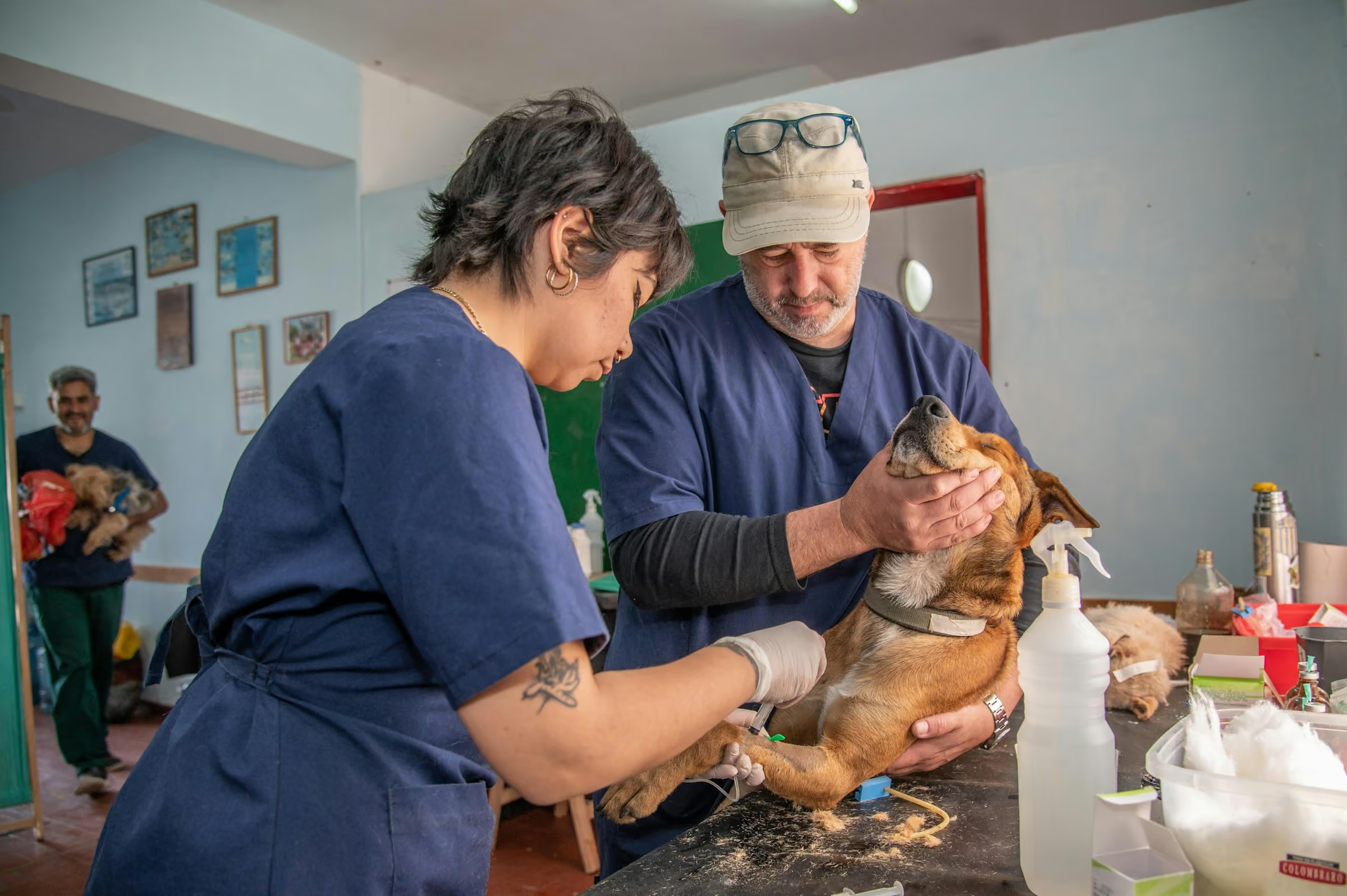
Showing 91,000 Veterinarians What Membership Buys: A Member Platform for the American Veterinary Medical Association
The Oncology Nursing Society’s platform wins DANDA Gold
Oomph and Adapt USA are now Pare & Co
 Christopher Murray· September 1, 2026
How the Work Splits
The association’s system of record — membership and dues, meetings and events, continuing education and certification, commerce and inventory, and the accounting behind them — with REST APIs, configurable member portals, and the staff-side applications that associations, unions and professional bodies run their operations on.
The platform in front of it. Member tasks surfaced as tasks in your own navigation rather than as a link out, an authentication handoff that does not ask a member to sign in again at a boundary they should not be able to see, content and membership data joined so what a member is shown reflects what they actually hold, views for the institutions that administer memberships on behalf of their staff, and search and accessibility across all of it rather than up to the edge of it.
One platform where a member used to cross between several. At the Oncology Nursing Society, three websites — clinical tools on one, research and education on another, membership and chapter functions on a third — became a single Drupal platform for more than 35,000 members across 200 chapters. The store, certificates, credential verification, course access and group purchasing now sit in the site’s own “I Want To” menu as tasks rather than as someone else’s site, and the healthcare employers administering ONS memberships for their staff administer them in one place. The platform took DANDA Gold in 2025.
The work in practice
An association’s website and its member area are usually two different products with one logo on them. The member notices at the worst possible moment: not while reading about the organization, but while renewing, registering or trying to get hold of a certificate they already earned.
Where the seam shows
At the transaction, never before it. No one crosses the boundary while browsing. They cross it while doing the thing membership is for, which is precisely when a change of typeface, navigation and login state reads as “you have left the organization and arrived somewhere else.”
In the navigation, which stops describing what you can do. Once member tasks live on another system, the website’s menu can only describe the association. The things a member actually came for — buy this, print that, prove I hold this credential — become a link labelled with the name of a portal instead of the name of the task.
In what the site is allowed to know. A website that cannot see membership state has to write for everyone at once. It cannot show a member their renewal date, hide what they cannot buy, surface the education they have already part-completed, or tell an expired member the one thing they most need to be told.
On the staff side, in duplicated administration. Employers and institutions that hold memberships for their people are a real constituency with real needs — a single view of who is covered, what lapses when, and what they are paying for.
What the website has to take on
The task, not the link. The unit of design is “print my certificates”, not “member portal”. If a member can name the thing they want, that name should appear in the navigation and the platform should perform it.
The authentication handoff, made invisible. A second sign-in at the boundary is the loudest possible announcement that there is a boundary. This is the piece most often left until the end and it is the one members feel first.
Membership state as content-modelling input. Once the platform can read what a member holds, personalization stops being a marketing feature and becomes ordinary correctness: the right price, the right availability, the right next step, and nothing offered that the person cannot have.
One search over all of it. Content, education, events and commerce are one library to a member and separate systems to an association. Search is where that difference is either resolved or exposed.
Administration for the organizations, not only the individuals. Where institutions hold memberships on behalf of staff, they need their own view — who is covered, what lapses when, what they are paying for.
The Oncology Nursing Society
ONS serves more than 35,000 members across 200 chapters, and the platform is a working tool for people in fast-paced clinical settings. Its clinical tools, research and educational material, and membership and chapter functions had grown up across three separate websites. Each did its own job. Together they left the joining up to the person doing the looking — a nurse searching during a shift, or an employer administering memberships in three places.
The three became one Drupal platform, with 40-plus content types reduced to 23 and Algolia replacing legacy Solr so search could run at clinical speed. The part that matters here is what happened to the member tasks: the ONS Store, provider card and certificate verification, NCPD certificate printing, course access and group purchasing now sit in the platform’s own “I Want To” menu, as tasks. They used to be someone else’s site.
The platform took Gold in the DANDA Awards’ Digital Media category in 2025. The engagement is written up as Search Was the Architecture.
What this makes possible
A member who never has to know how your systems are arranged. The AMS keeps doing what it is good at — the record, the money, the credential, the roster — and none of that has to move for the experience in front of it to become one thing.
What changes is what the association can say in its own navigation. When every task a member has is something the platform performs, the menu stops describing the organization and starts describing what the member can do.
Practice leadership

Jack Hartman
Jack Hartman’s specialty is audience experience at institutional scale. He has led member platforms where the association’s own systems are the thing a member should never have to notice.