Equipping Four Audiences With Their Own Path: A Campaign Platform for the National Environmental Education Foundation
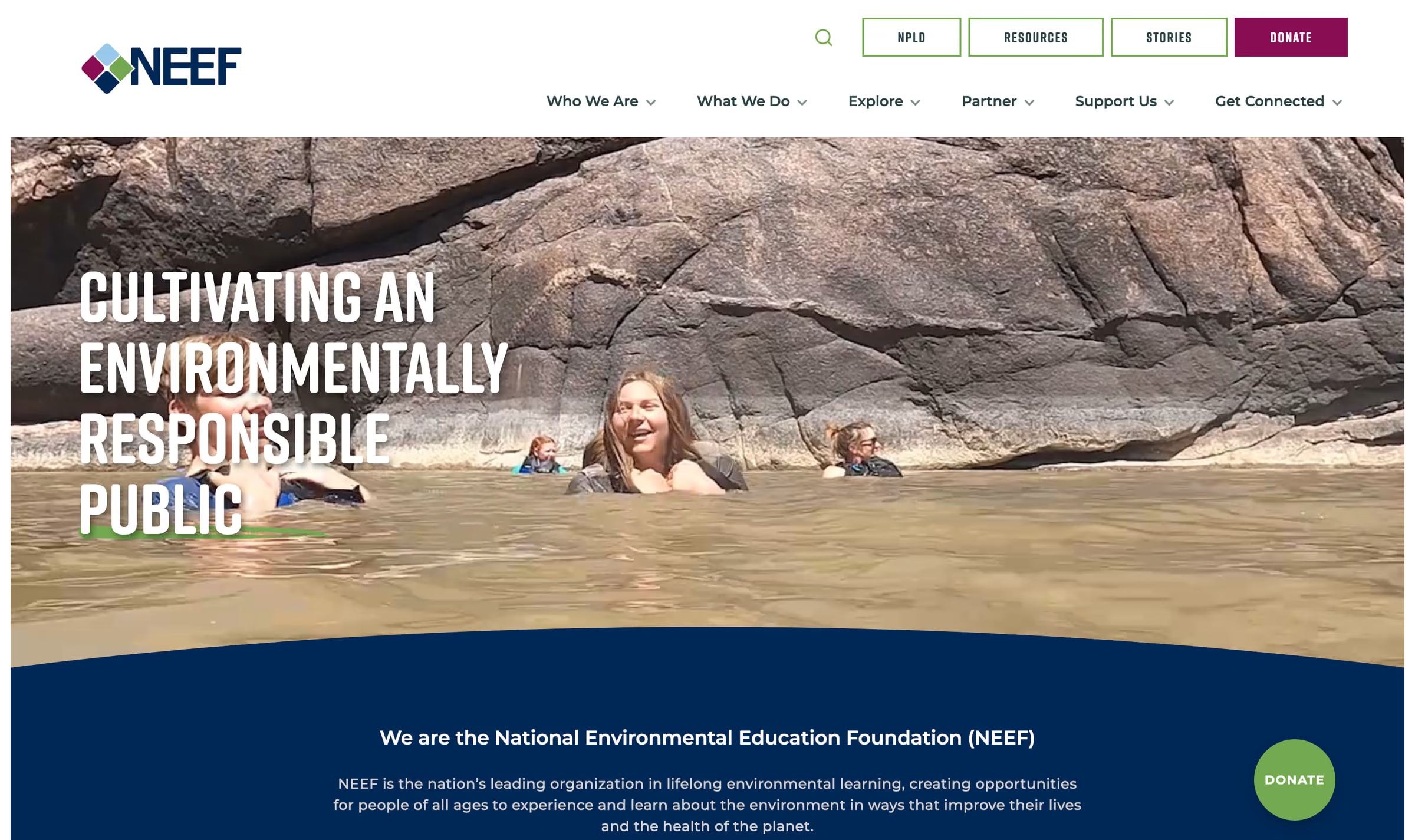
NEEF’s programs had outgrown its Drupal site, and every new page meant asking someone technical. We rebuilt it around a component library. Their own team made more than 100 landing pages in the first three months.
The work
The Challenge: Programs Growing Faster Than the Website
NEEF’s website is the route into its programs and the place funders decide whether the organization is worth backing — and the programs had grown past what the site was built to publish, with every new page waiting on someone technical.
The Strategy: Organize the Architecture by Audience, Then Hand Over the Tools
Restructured around the four audiences, then handed the team the pieces.
- Architecture organized by audience. A teacher and a corporate partner want different things and should not have to navigate as though they were the same person.
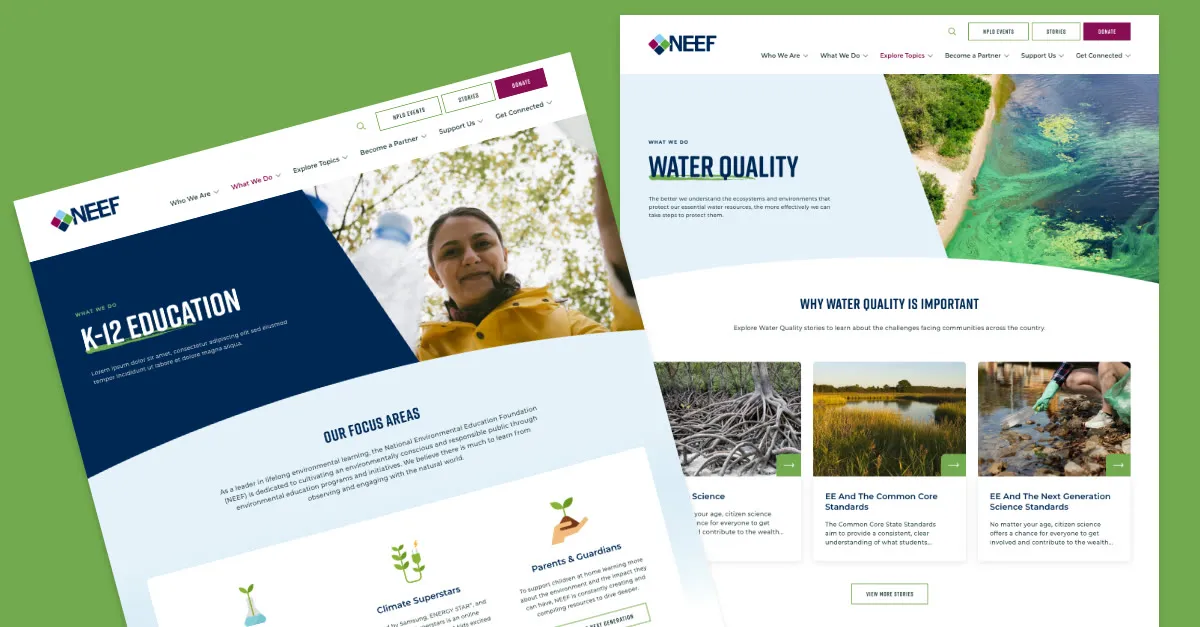
- A custom component library. Topic-based browsing pulls resources and impact stories together, with a design system keeping the hero structures consistent.
- Accessibility designed in. High-contrast typography and 100 custom icons drawn across a range of skin tones, on a site arguing this work belongs to everyone.
The Outcomes: A Hundred Landing Pages They Built Themselves
A small communications team publishes on its own.
- Engagement | 100+ landing pages built by NEEF’s own team in three months | Topic-based browsing across resources and impact stories
- Trust | Accessibility as a design constraint from the start | Three Davey Silvers in 2023 — Education, General Non-profit, Website Redesign
- Growth | National Public Lands Day hosts run their own events from their own dashboard | Listings, archival and an event locator handled by the platform
The detail
Why it mattered
- The route into the programs, and the funder’s first look. The website is not a brochure for NEEF’s programs, it is the route into them and the place a funder forms a view. The programs kept producing more content than the site had been built to publish, and the funder-facing job had grown just as fast.
- Four demands at once. Show impact to potential funders, reach further through accessibility and search, deliver real resources — maps, toolkits, online courses — and understand engagement without degrading the experience of the people being measured.
- Publishing anything new required someone technical. Underneath all four sat the same constraint: every new page went through a developer’s queue.
How it was built
- Architecture organized by audience. The information architecture was restructured around the four audiences, because a teacher and a corporate partner are not looking for the same thing and should not have to navigate as though they were.
- A custom component library. Topic-based browsing pulls resources and impact stories together under subjects like water conservation and climate change, and a design system keeps the hero structures consistent across the Explore pages.
- Accessibility as a design constraint. High-contrast typography, and 100 custom icons drawn across a range of skin tones — on a site whose entire argument is that this work belongs to everyone.
- National Public Lands Day got its own machinery. Anyone wanting to host an event can set one up and run it from their own dashboard, with listings and archival handled automatically and a locator for people looking for an event near them.
What changed
- 100+ landing pages in three months, built by NEEF. The site launched in May 2023 and within three months their own team had built more than a hundred new landing pages from the component library.
- The number is theirs. It measures what NEEF’s team could build once we had gone — a hundred pages of it in the first season.
- Three Davey Silvers in 2023. In Education, General Non-profit and Website Redesign.
Nonprofit website redesign questions
How should a nonprofit website be organized?
Around its audiences rather than its org chart. NEEF’s architecture was restructured for educators, conservationists, nonprofits and partners — because a teacher and a corporate partner are not looking for the same thing and should not have to navigate as though they were.
What does a component library do for a small communications team?
It removes the technical gatekeeper. Before the rebuild, publishing anything new at NEEF required someone technical; after launch, their own team built more than 100 landing pages from the component library in three months. That number is theirs: it measures what the team could build once Pare & Co had gone.
How is accessibility built into a nonprofit redesign?
As a constraint rather than a final pass. NEEF’s redesign built in high-contrast typography for readability and a library of 100 custom icons drawn across a range of skin tones — on a site whose entire argument is that environmental work belongs to everyone.
How can a small nonprofit team publish more content?
For the NEEF rebuild by Pare & Co: an architecture organized by audience, a component library their team publishes from without technical help — 100+ landing pages in the first three months — event machinery for National Public Lands Day with self-service host dashboards, and three Davey Silver Awards in 2023.
Client leadership

Jack Hartman
Jack Hartman’s specialty is editorial operations. He has led campaign platforms that give four audiences their own route through the same material.