Establishing the Nation’s Pediatric Mental Health Leader Online: A Digital Front Door for Bradley Hospital
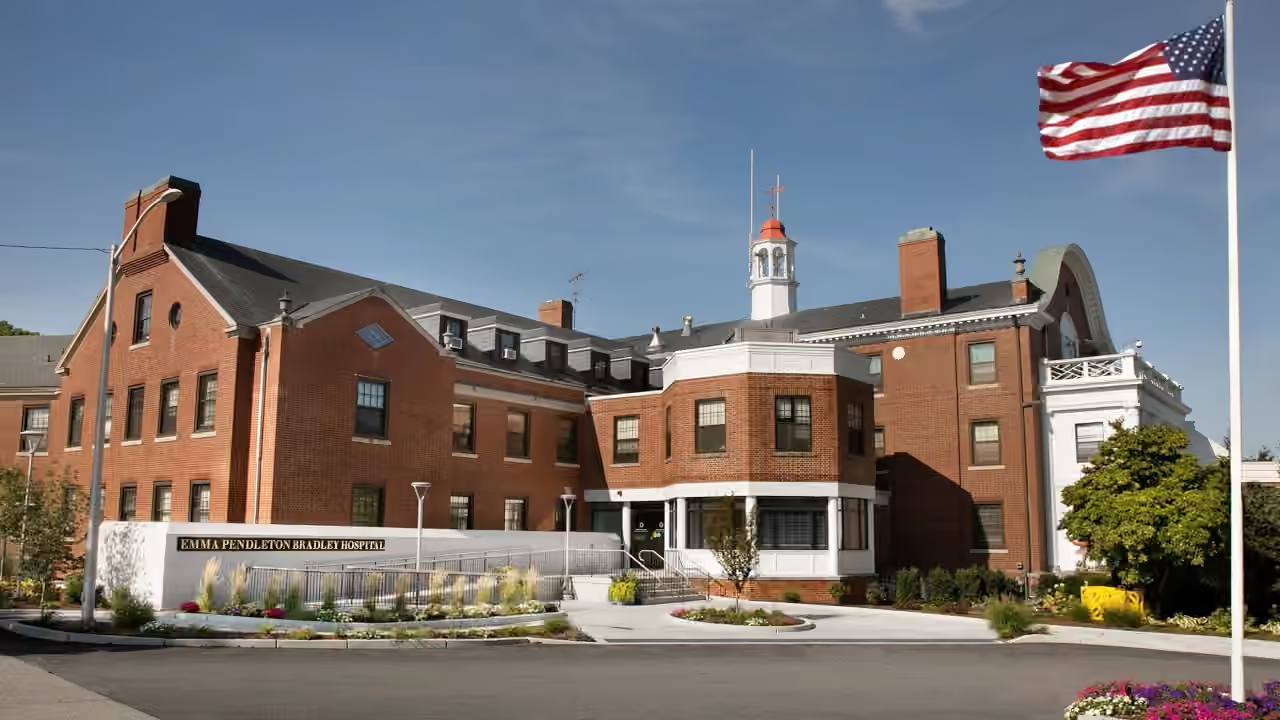
Bradley Hospital is the country’s first hospital dedicated entirely to children’s mental health, and its website lived inside a health system’s. We gave it a home of its own — and gave families a way to find it.
The work
The Challenge: A National Leader Invisible Inside a Health System’s Website
A parent researching intensive treatment for a child in crisis decides at speed, usually at night, and partly on whether the institution in front of them looks like it knows what it is doing.
Bradley Hospital is the country’s first hospital dedicated entirely to children’s mental health, a teaching hospital for Brown University with families seeking its care nationwide. Its content lived inside a health system’s website: scattered across sections, stranded in PDFs, hosted on outside platforms. Search had no independent Bradley presence to find, and neither did the AI answer engines that now surface health information — so one of the country’s most authoritative institutions on pediatric mental health was invisible to the families looking for exactly that authority.
The Strategy: Building Bradley’s Digital Front Door on Drupal
Give Bradley a home of its own without giving its small team a second platform to run.
- One platform, Bradley’s own domain. Drupal with Domain Access puts BradleyHospital.org on its own domain and brand while staying connected to the Brown University Health ecosystem. Bradley-only content serves on Bradley’s domain, shared resources adapt to whichever domain requests them and canonical URLs keep the two properties from competing in search.
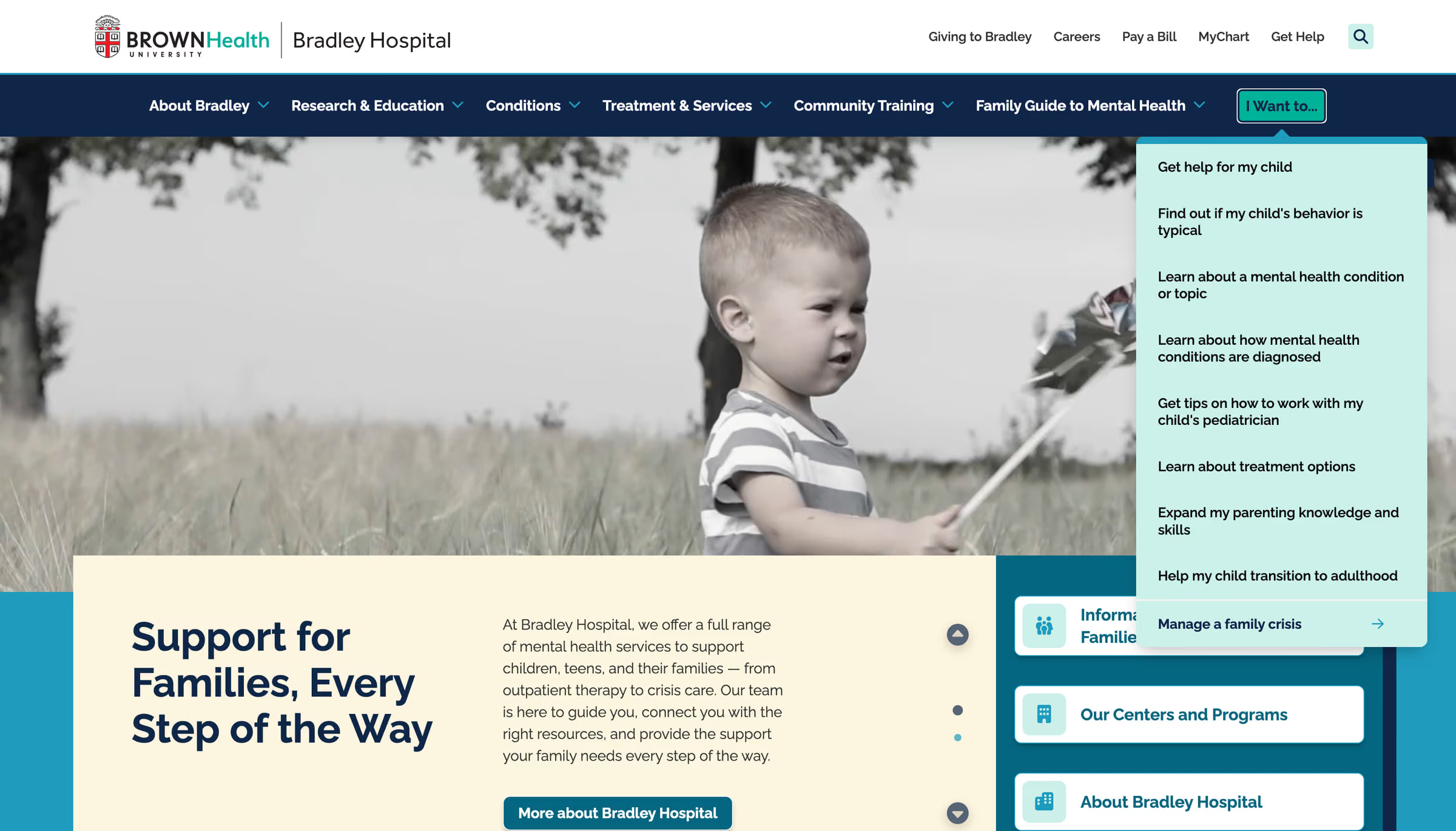
- Navigation built for the worst day. A custom “I Want to…” menu puts find care, crisis support, programs and referrals one or two clicks from anywhere on the site, and every entry is a sentence a parent would say.
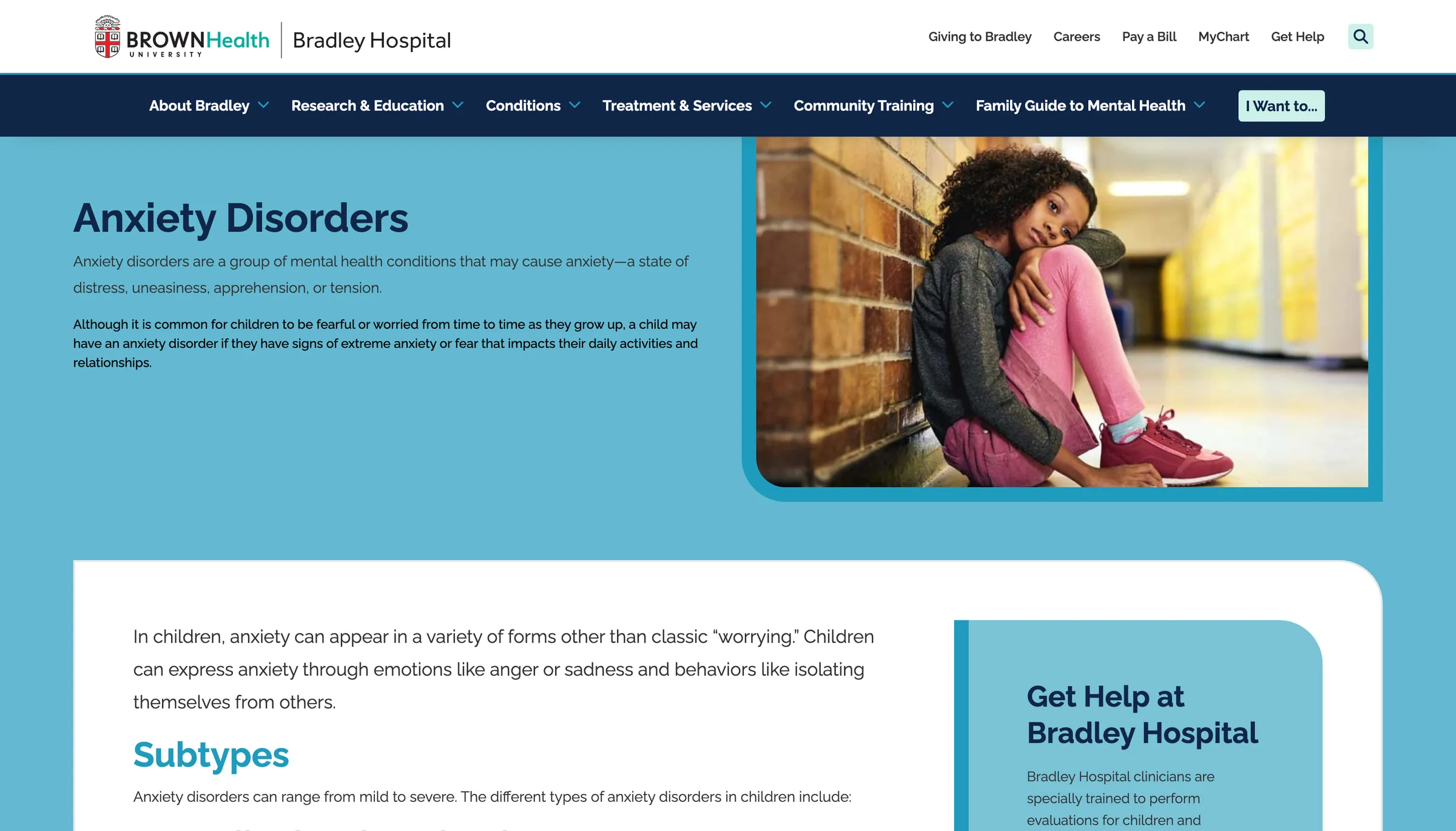
- Structured content where PDFs had been. Conditions, Courses and Podcasts: an education publication that existed only as a PDF became structured pages, courses hosted elsewhere moved in and podcasts became indexable content, tied together by taxonomy so one answer leads to the next.
- Warmth without losing authority. The Brown Health palette, softened: rounded shapes, thick borders, muted tones, gentle motion. A stakeholder said the site “speaks ‘professional’ while also having a little lighter touch to it.”
- Accessibility designed in, not audited after. WCAG practice and screen reader behavior were in the design conversation from the first sketches, and mobile was treated as the primary case.
The Outcomes: 95,000 New Users in Six Months
Since launching in November 2025, a property with no independent search presence has become the digital front door families find first: more than 95,000 new users in six months, with nearly 89,000 sessions arriving from organic search.
The behavior behind those numbers is what the site was designed for. Nearly half of visitors, 48.1%, arrive on mobile, from a parking lot, a waiting room or a kitchen table at night. Program and condition pages run 50 to 83 seconds of engagement, which is a person reading before they act. And 13,000 users return: families researching care for a child come back several times before they decide, and coming back is the site doing its job as a trusted resource.
Bradley’s team now manages, updates and promotes its own content, with new conditions, courses and resources published without booking engineering time. An institution recognized nationally for clinical excellence now has a digital home to match, one that families, providers and answer engines can all find.
The detail
Why it mattered
- A parent’s decision, made at speed. Someone choosing intensive treatment for a child in crisis decides at speed, usually at night, and partly on whether the institution in front of them looks like it knows what it is doing. That is a Trust problem solved with information architecture.
- Three audiences, three urgencies. Families searching for care, providers weighing a referral, clinicians looking for professional education. Their needs barely overlap, and the first group arrives in a state no design system accounts for.
- Authority with nowhere to live. Bradley is among the most authoritative institutions in the country on pediatric mental health, and search could not see it. There was no independent presence for that authority to attach to, and AI answer engines look for the same signals it lacked: a clear brand, structured content and a domain of its own.
How it was built
- Four task flows set the structure. Find care, reach crisis support, make a referral, register for a course. Settled with Bradley’s leadership and clinicians before any architecture was drawn.
- One platform, Bradley’s own domain. Bradley-only content serves on Bradley’s domain, shared resources adapt to whichever domain requests them, and canonical URLs stop the two properties competing with each other in search. Bradley’s team controls its own digital presence without running a second platform.
- Three content types replaced a filing cabinet. Conditions, Courses and Podcasts. A mental health education publication that had existed only as a PDF became structured pages, courses hosted elsewhere moved in, and podcasts became indexable content tied to related programs. Taxonomy connects all three.
- Warmth that does not cost authority. The Brown Health palette, softened: rounded shapes, thick borders, muted tones, gentle motion. A stakeholder put it better than we would have, saying the site “speaks ‘professional’ while also having a little lighter touch to it.”
- Accessibility designed in, not audited after. WCAG practice and screen reader behavior were part of the design conversation from the first sketches, and mobile was treated as the primary case.
What the numbers mean
- 48.1% arrive on mobile. Families are not researching this from a desk. They are doing it from a parking lot, a waiting room or a kitchen table at eleven at night. The mobile experience was built for that reality.
- 50 to 83 seconds on program pages. Intensive OCD and anxiety programs, outpatient services, levels of care, with the Courses page at 65. That is a person reading, and these are the pages a family reads before it acts.
- 13,000 returning users. Families researching care for a child come back several times before they act. The 13,000 who return are the site doing its job as a trusted resource.
Where it stands now
- Bradley’s team runs its own content. New conditions, new courses, new resources, without booking engineering time or negotiating with a health system’s platform to do it.
- Launched as a baseline. The site went live in November 2025 with user testing, design refinement and further accessibility work planned as the next phase rather than a maybe.
News & Recognition
- June 2026
Bradley Hospital's site takes a DANDA Platinum
Platinum in the Website category of the DANDA Awards' fifth season, plus a Digital Health Award Gold — for the first standalone site the country's first children's mental health hospital has had.
- May 2026
Bradley Hospital wins a NESHCo Lamplighter Silver
Silver in the Websites category at the 2026 Lamplighter Gala in Burlington, Vermont, for the nation’s first hospital dedicated to children’s mental health.
Digital front door questions
What is a digital front door in healthcare?
The digital front door is where patients and families first find a healthcare organization online and act: find care, reach crisis support, make a referral, register for a course. For Bradley Hospital it is BradleyHospital.org, built around exactly those tasks, with an “I Want to…” menu that puts each one one or two clicks from anywhere on the site, in the visitor’s own words.
Why does a specialty hospital inside a health system need its own website?
Bradley Hospital is part of the Brown University Health system, and a system’s website has to serve every hospital, service line and audience in it. A national specialty leader has a more particular job. Bradley is among the country’s most authoritative institutions in pediatric mental health, and its audiences arrive with different urgencies: families searching for care, providers weighing a referral, clinicians seeking education. A dedicated domain gives that authority an independent presence search can see, built around those three groups, while Domain Access keeps the site connected to the system it belongs to.
How does a hospital website show up in AI-powered search?
With the same signals that power organic search: a clear brand, structured and indexable content and a domain of its own. Those are the signals answer engines use to identify authoritative sources, and for a hospital inside a larger health system, a dedicated domain is what ensures the attribution lands on Bradley itself. Structured Conditions, Courses and Podcasts pages give both kinds of engine something to cite.
Can a hospital within a health system have its own site without running a second platform?
Yes. BradleyHospital.org runs on Drupal with Domain Access inside the Brown University Health ecosystem: Bradley-only content serves on Bradley’s domain, shared resources adapt to whichever domain requests them and canonical URLs keep the properties from competing in search. Bradley’s team manages its own content with no second platform to maintain.
How do you measure the success of a hospital website redesign?
For the Bradley Hospital redesign by Pare & Co, which put a national specialty leader on its own domain: more than 95,000 new users in the six months after the November 2025 launch, with nearly 89,000 sessions arriving from organic search. 48.1% of visitors arrive on mobile, program and condition pages run 50 to 83 seconds of engagement, and 13,000 users returned, which is the behavior of families who come back several times before they decide.
Client leadership

Matthew O’Bryant
Matthew O’Bryant has led the platform work for pediatric and behavioural health providers, where a site is often the first thing a family in difficulty finds.