
Inspiring a Traveler in Two Minutes: A Personalization Quiz for Visit California
Visit California’s “Let’s Play” rebrand launched globally, with partner agencies running $32.8M of paid media behind it. The work in front of us wasn’t capturing attention. It was converting it.

The work
The Challenge: Making a $32.8M Campaign Pay Off After the Click
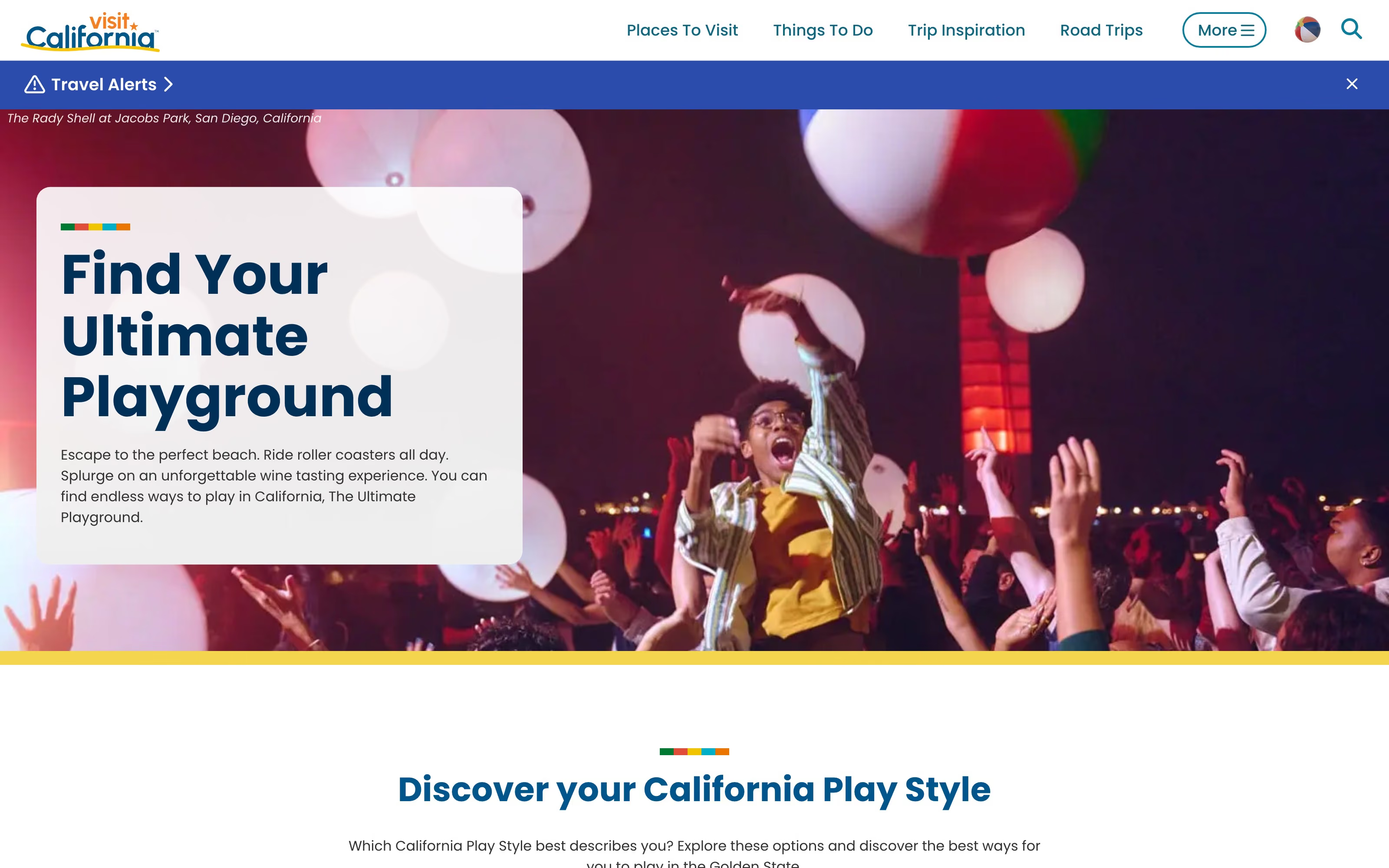
Visit California is the state’s Destination Marketing Organization, running on a $185M annual budget. After two decades of “Dream Big”, new research surfaced a different traveler motivation: joy, connection, play. The state repositioned around “California, the Ultimate Playground”, and “Let’s Play” launched it across TV, out-of-home, social and digital — all of it driving to a digital landing experience that did not exist yet.
Awareness was already handled. The stakes were what happened after the click, and there was one chance to get it right.
The Strategy: A Two-Minute Personalization Quiz Built on Wyng
Build for what the visitor needs on arrival: a route into the destinations Visit California already had.
- An image-based quiz on Wyng. Nine questions, about two minutes, choosing between photographs, because reading is friction for someone arriving from a TV spot and pictures show progress as the quiz advances.
- Nine questions, counted deliberately. Long enough for the weighting logic to produce a persona match worth having, short enough to finish in one sitting.
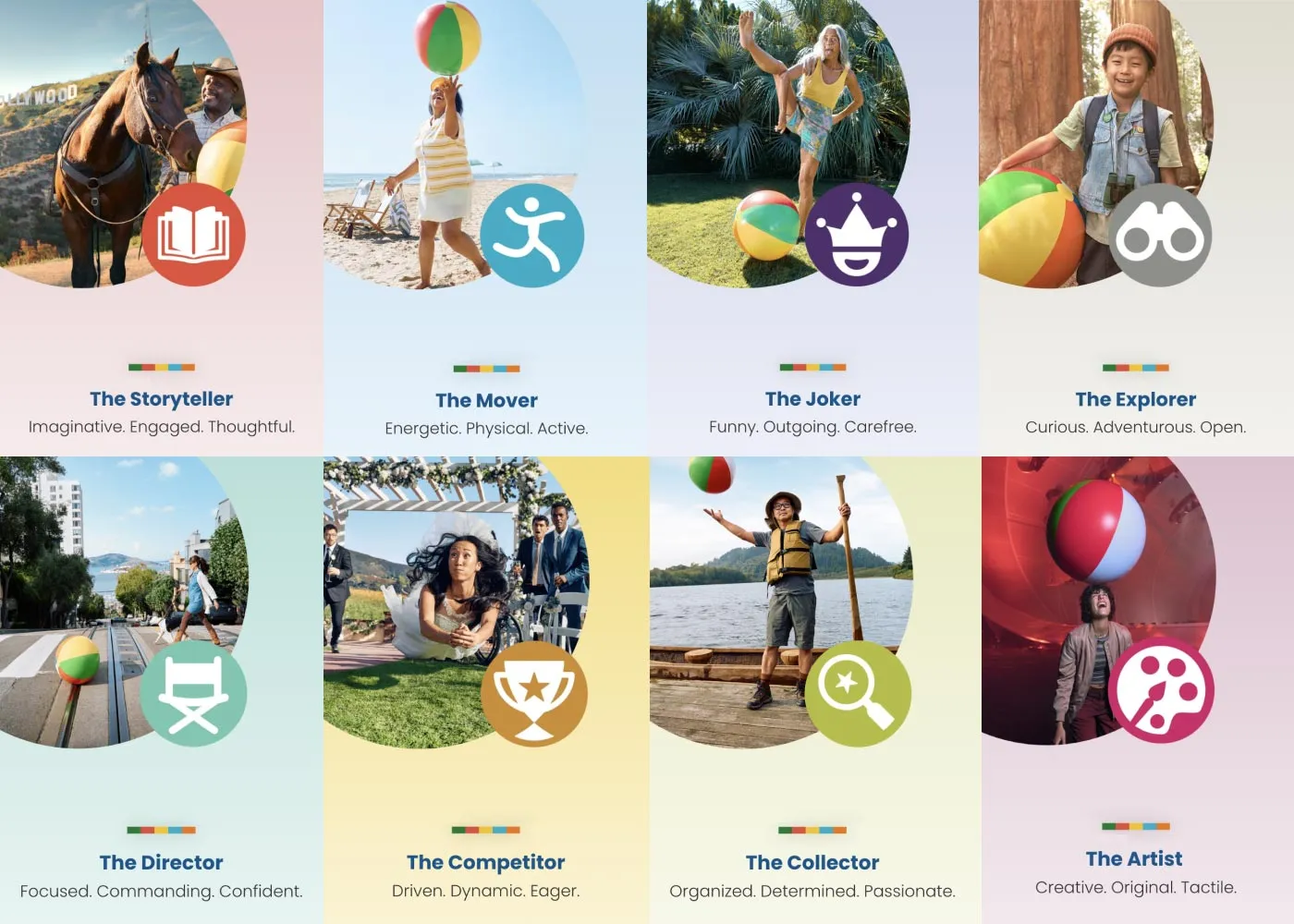
- Eight Play Styles from the National Institute for Play. Research from a California-headquartered authority gave the personas editorial weight and the campaign California-grown roots.
- Results that route into the existing library. Curated destinations, podcasts, videos and a celebrity match, with email capture for re-engagement after the visit.
- Three months, concept to launch, coordinated across the partner agencies already producing the campaign.
The Outcomes: 1.2 Million Visitors, and 81.4% Finished the Quiz
In the first three months after launch, 1.2 million visitors arrived and 81.4% completed the quiz. A completion rate at that level on a nine-question quiz is the finding: no one was made to do it. Visitors spent 3:00 on the quiz and 2:15 on their results against a 22-second site average — six to eight times the site’s typical session depth, which is the difference between a campaign producing awareness and a campaign producing a relationship.
The Growth side keeps paying. Email opt-ins became a permissioned audience for personalized follow-up, and visitors who saw themselves in a Play Style had a reason to come back and plan. “Let’s Play” is the first beat of a multi-year brand strategy, and year one’s audience is what year two builds on.
The detail
Why it mattered
- A blank surface, and one chance. The funnel converged on a page that did not exist yet. Everything about the experience would be a first impression, with $32.8M of paid media delivering the audience.
- The instinct was to match the campaign’s production value. Heavy video, branded surface, maximum visual ambition. A $32.8M campaign earns a landing page that feels like one. That reads the funnel wrong.
- Attention had already been bought. By the time a visitor clicked, paid media had done its job. They were not there to be impressed again; they were there to be helped, turning “California is fun” into “here is what California looks like for me”.
- The path was the constraint. Visit California already had a deep library. Without a route through it, the campaign’s downstream conversion would behave like most campaign landing pages: high traffic, fast bounce, thin sustained engagement. A wow surface would have optimized for a metric the campaign did not need.
The call and the build
- Build for the moment of arrival. The landing experience had one job: turn a visitor who liked the idea of California into a visitor with somewhere to go. Every other ambition for the page was measured against it.
- An image-based quiz, nine questions, about two minutes. Built on Wyng. Choosing between two photographs is faster than reading, shows progress visually as the quiz advances and matches how someone arrives from a TV spot.
- Nine questions, counted deliberately. Long enough for the weighting logic to produce a persona match worth having. Short enough to finish in one sitting.
- Eight Play Styles, sourced from real research. The personas came from the National Institute for Play, which is headquartered in California. Research from a domain authority gave them editorial weight and gave the campaign California-grown roots.
- Results that route into the existing library. Personalization surfaced what was already in the library, so each visitor’s path felt like theirs: curated destinations, podcasts, videos and a celebrity match, with email capture supporting re-engagement after the visit.
- Three months, alongside the partner agencies. Concept to launch while coordinating across the campaign’s broader production, keeping the digital experience matched to its specific job in the funnel.
What moved
- 1.2 million visitors, and 81.4% finished. In the first three months after launch. A completion rate at that level on a nine-question quiz is the finding: no one was made to do it.
- 3:00 on the quiz, 2:15 on the results, against a 22-second site average. Six to eight times the site’s typical session depth. That gap is the difference between a campaign producing awareness and a campaign producing a relationship.
- The Growth side keeps paying. Email opt-ins became a permissioned audience for personalized follow-up, and visitors who saw themselves in a Play Style had a reason to come back and plan. “Let’s Play” is the first beat of a multi-year brand strategy; year one’s audience is what year two builds on.
Personalization quiz questions
Do personalization quiz campaigns actually convert?
For the Find Your Ultimate Playground quiz built by Pare & Co for Visit California, 1.2 million visitors arrived in the first three months after launch and 81.4% completed the nine-question quiz. Visitors spent three minutes on the quiz and over two more on their results, against a site average of 22 seconds.
How long should a marketing quiz be?
Long enough to earn its answer, short enough to finish in one sitting. Visit California’s quiz ran nine image-based questions, about two minutes: enough for the weighting logic to produce a persona match worth having, with photographs in place of reading because choosing between images is faster for someone arriving from a TV spot.
What should a campaign landing page do?
The job the funnel has left. By the time a visitor clicks, paid media has already bought their attention, so the landing experience turns captured interest into specific, actionable engagement. Visit California’s landing experience routed each visitor to a Play Style with curated destinations, podcasts, videos and a celebrity match, and email capture for re-engagement after the visit.
How do you personalize travel content without building a second library?
By routing. The quiz’s eight Play Styles came from National Institute for Play research, and each result surfaced destinations and content that already existed on visitcalifornia.com, so personalization became a path through the library the state had spent years building.
Client leadership

Jack Hartman
Jack Hartman’s specialty is audience experience at institutional scale. He has led campaign work where two minutes of attention is the entire budget.