
Planning a Trip Without Leaving the Site: An AI Trip Planner for Visit California
Visit California had seventy-four hand-built road trips and a new AI partner in Mindtrip. The engagement was the space between them: embedding someone else’s planner so deeply into the state’s own site that a traveler never feels the seam.

The work
The Challenge: Travel Planning Was Moving Into AI Chat
Visit California operates the state’s official tourism platform, and its road trip library, seventy-four itineraries hand-built by California Travel Experts, is some of the most-loved content on it. Then travel planning started moving into AI chat, where a traveler can get an answer without ever seeing the state’s own work.
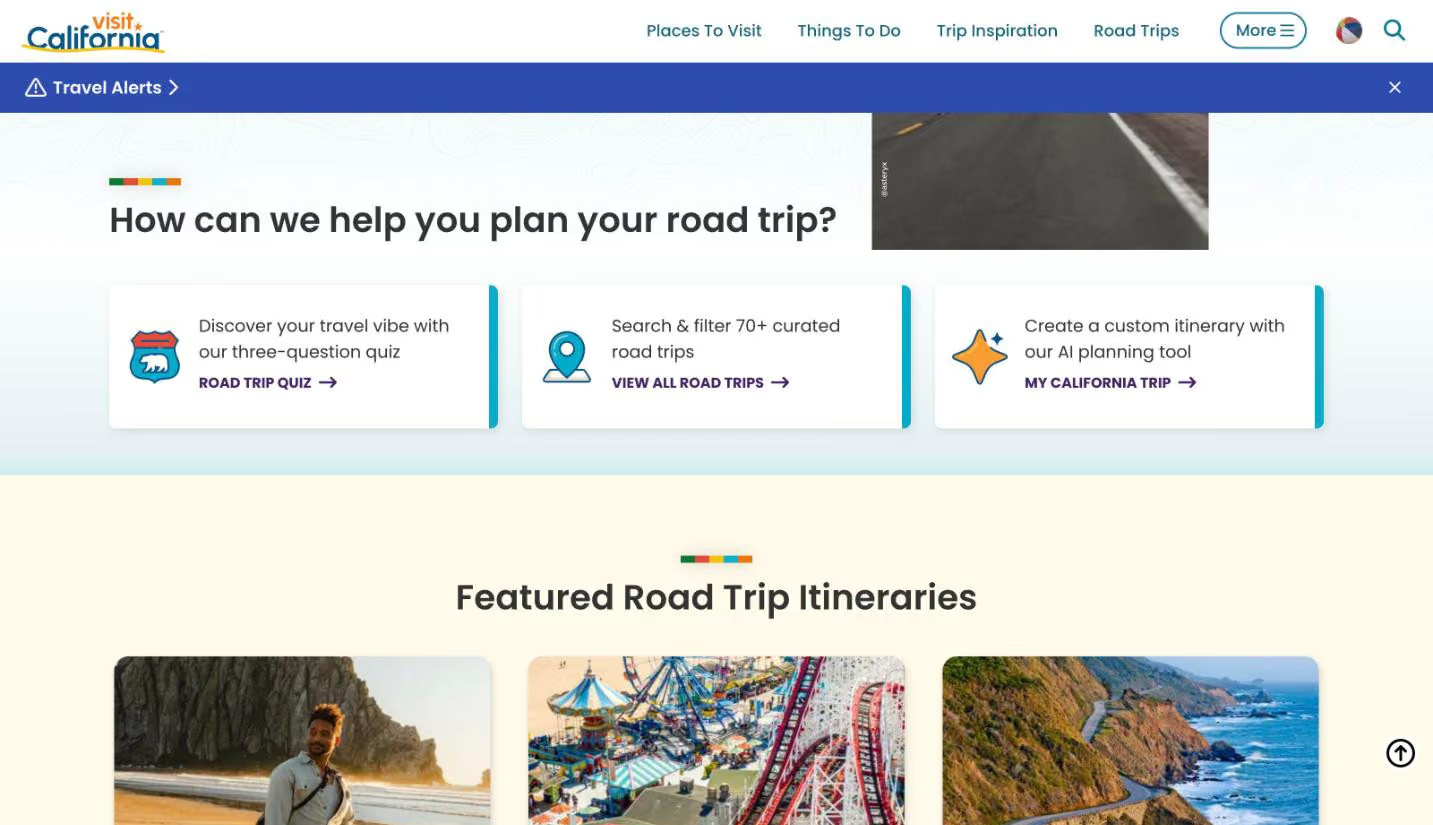
Visit California chose to meet that moment on its own site, partnering with Mindtrip, an AI travel-planning platform, and asking for it to be embedded. That one word set the engagement’s terms: the planner had to live inside the page, speak the brand, stay inside California, meet the site’s accessibility and language commitments and report into the same analytics as everything else.
The Strategy: An Embedded AI Trip Planner, Built to the Site’s Standards
Treat someone else’s AI as a feature of the site.
- A planner that lives inside the page. A slide-out branded My California Trip keeps the whole conversation on visitcalifornia.com, with the disclosure that it is powered by Mindtrip.
- The curated library as raw material. All seventy-four road trips, structured in Drupal and mapped one-to-one to Mindtrip guides, so the AI starts from the editors’ work and its answers cite the state’s own pages.
- Crawl, walk, run. A percentage rollout to US English traffic, a public pilot, then a beta timed to the campaign TV spot, each phase widening exposure only after the last one proved out.
- Guardrails, red-teamed. California-only itineraries, adversarial prompt testing and a curated fact layer for sensitive moments.
- Measured end to end. Planner events into GA4 and BigQuery, sign-ups into Visit California’s own database and email program.
The Outcomes: 48.4% of Planner Opens Became Conversations
The state’s site did not lose its travelers to AI. It became the place they use it.
In the first sixty days, 48.4% of travelers who opened the planner sent a message — the strongest open-to-chat conversion Mindtrip had measured across its destination deployments. Planner users averaged eleven minutes on site in January 2026, and about 9% of everyone who opened a chat was still going five messages in. The metrics that fund a DMO moved together: partner handoffs, sign-ups and itinerary creation all up more than 45% month over month as the planner’s exposure widened.
And the framework outgrew its first surface. A year after launch, the Family Hub shipped its own Mindtrip entry points, tested with 24 participants before production, and the shared initiatives list from launch now runs the ongoing work: events, welcome centers, topic modeling of what travelers actually ask and the next surfaces in line.
The detail
Why it mattered
- Trip planning was moving into AI tools. Travelers were starting to take their questions to chat interfaces that answer without ever showing a destination’s own content. For a site built on editorial inspiration, the stakes were becoming the research library behind someone else’s answer.
- Seventy-four road trips, each one fixed. The state’s road trip library is hand-built by California Travel Experts: deep, vetted and fixed. A traveler with six days and a four-day itinerary in front of them had to do the adapting themselves.
- A drop-in widget was the easy answer, and the wrong one. Mindtrip ships as HTML snippets a site can paste in. On the state’s flagship tourism platform, an off-brand overlay free to recommend anything the open internet says would have been a liability presented as a feature.
- A new surface, made to meet the old standards. The site serves international audiences in their own languages, keeps hard-won accessibility commitments and reports into one analytics stack. An AI feature had to sit inside all of that.
The call and the build
- Embedded as the site’s planning layer. The planner opens as a slide-out inside the page, branded My California Trip, and the conversation happens without leaving visitcalifornia.com. What began as a simple integration became the site’s planning layer.
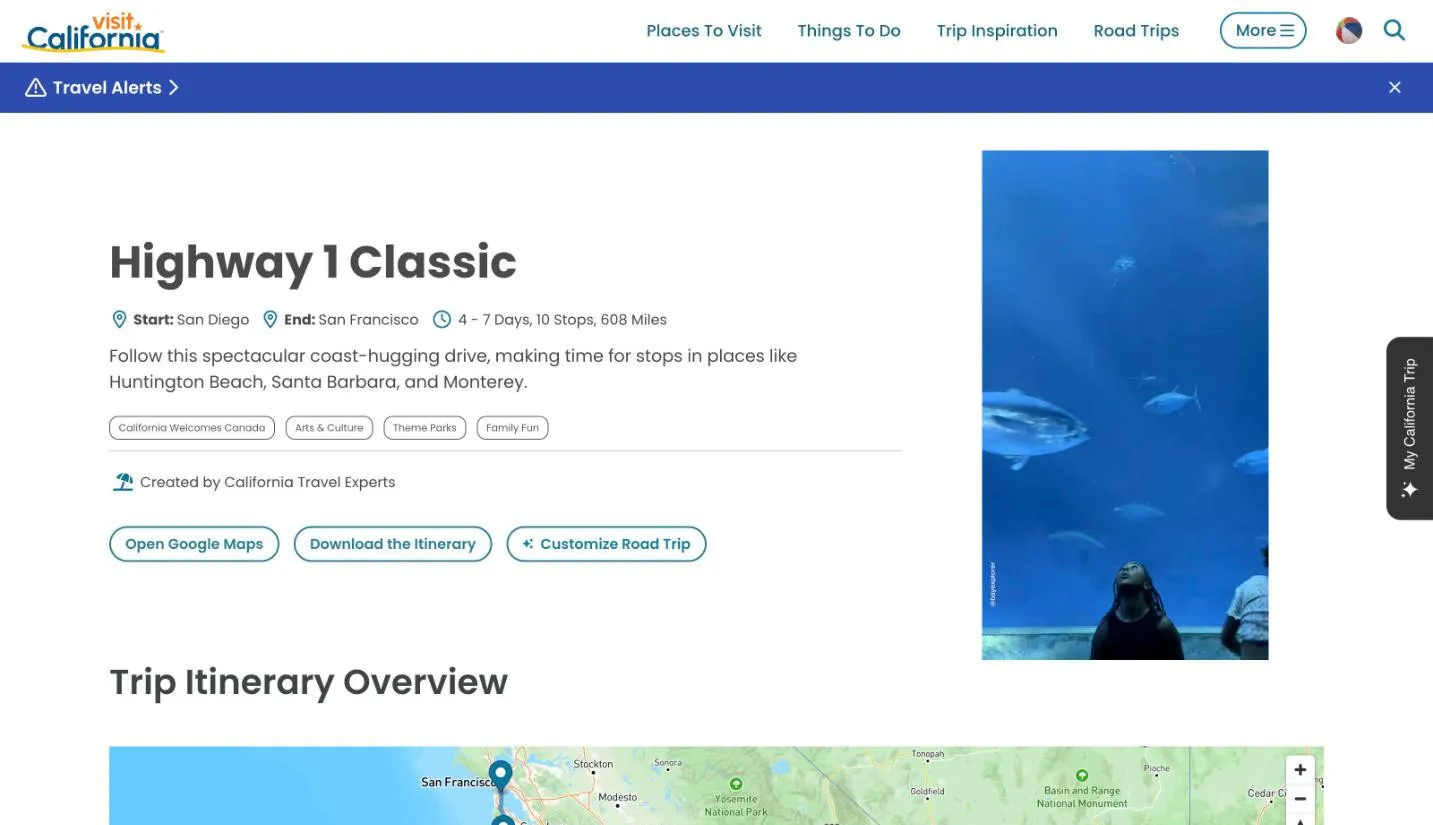
- The curated library became the AI’s raw material. Each road trip is structured content in Drupal, exposed over its API and mapped one-to-one to a Mindtrip guide, so “Customize Road Trip” starts from the editors’ itinerary and the answers cite the state’s own pages.
- Crawl, walk, run. A soft launch to 25% of US English traffic, then 50%, then a public pilot, then a beta launch timed to the campaign TV spot and Visit California’s Outlook Forum. Each phase widened exposure only after the previous one proved out.
- Guardrails, red-teamed. California-only itineraries as the hard rule, adversarial prompt testing before launch and a curated fact layer for the moments that matter, including keeping recommendations current and responsible during the January 2025 Los Angeles fires.
- Accessibility as an entry condition. An accessibility audit of the tool went to Mindtrip before the integration shipped, and Mindtrip committed to WCAG conformance ahead of the launch, with screen reader and keyboard work released through the crawl and walk phases.
- Measured like the rest of the site. Planner events flow through the site’s tag manager into GA4 and BigQuery, covering chats, itineraries, sign-ups and partner handoffs, and sign-up data flows from Mindtrip through the CMS into Visit California’s own email program.
What moved
- Openers became planners. In the first sixty days, 48.4% of travelers who opened the planner sent a message, the strongest open-to-chat conversion Mindtrip had measured across its destination deployments.
- Eleven minutes with the planner. Travelers who used it averaged eleven minutes on site in January 2026, and the conversations deepen: about 9% of everyone who opened a chat was still going five messages in.
- The metrics that fund a DMO moved together. In January 2026, partner handoffs, sign-ups and itinerary creation were all up more than 45% month over month as the planner’s exposure widened.
- A second surface on the same framework. A year after the road trips launch, the Family Hub shipped its own Mindtrip entry points, prompt blocks and a “Turn this Article into a Trip” flow, tested with 24 participants before it reached production.
- A standing roadmap. The shared initiatives list that came out of launch now runs the ongoing work: events, welcome centers, topic modeling of what travelers actually ask and the next surfaces in line.
AI trip planner questions
How do you add an AI trip planner to a tourism website?
Embed it as a feature of the site and make it meet the site’s standards for brand, accessibility, languages and analytics. A planner that opens inside the page, in the destination’s own brand, keeps the whole conversation on the destination’s domain, with a disclosure naming the AI platform behind it. That is how Visit California’s My California Trip runs: a slide-out on visitcalifornia.com, powered by Mindtrip and disclosed as such.
How do you keep an AI travel planner on brand and inside the destination?
With guardrails designed in and tested, and with the destination’s own curated content as the AI’s starting material, so its answers cite the destination’s pages. For Visit California that meant California-only itineraries as the hard rule, adversarial prompt testing before launch and a curated fact layer for the moments that matter, including keeping recommendations current and responsible during the January 2025 Los Angeles fires.
Do travelers actually use AI trip planners?
For the Visit California integration by Pare & Co, 48.4% of travelers who opened the planner sent a message in the first sixty days, the strongest open-to-chat conversion Mindtrip had measured across its destination deployments. Planner users averaged eleven minutes on site in January 2026, and partner handoffs, sign-ups and itinerary creation rose more than 45% month over month as the planner’s exposure widened.
How do you measure an AI trip planner?
Like any other feature of the site, in the same analytics stack. Planner events flow through the tag manager into GA4 and BigQuery, covering chats, itineraries, sign-ups and partner handoffs, and sign-up data flows from the planner through the CMS into the destination’s own email program.
Client leadership

Jack Hartman
Jack Hartman’s specialty is cultural and destination platforms. He has led planning tools built to keep a traveller on the site rather than sending them away to decide.