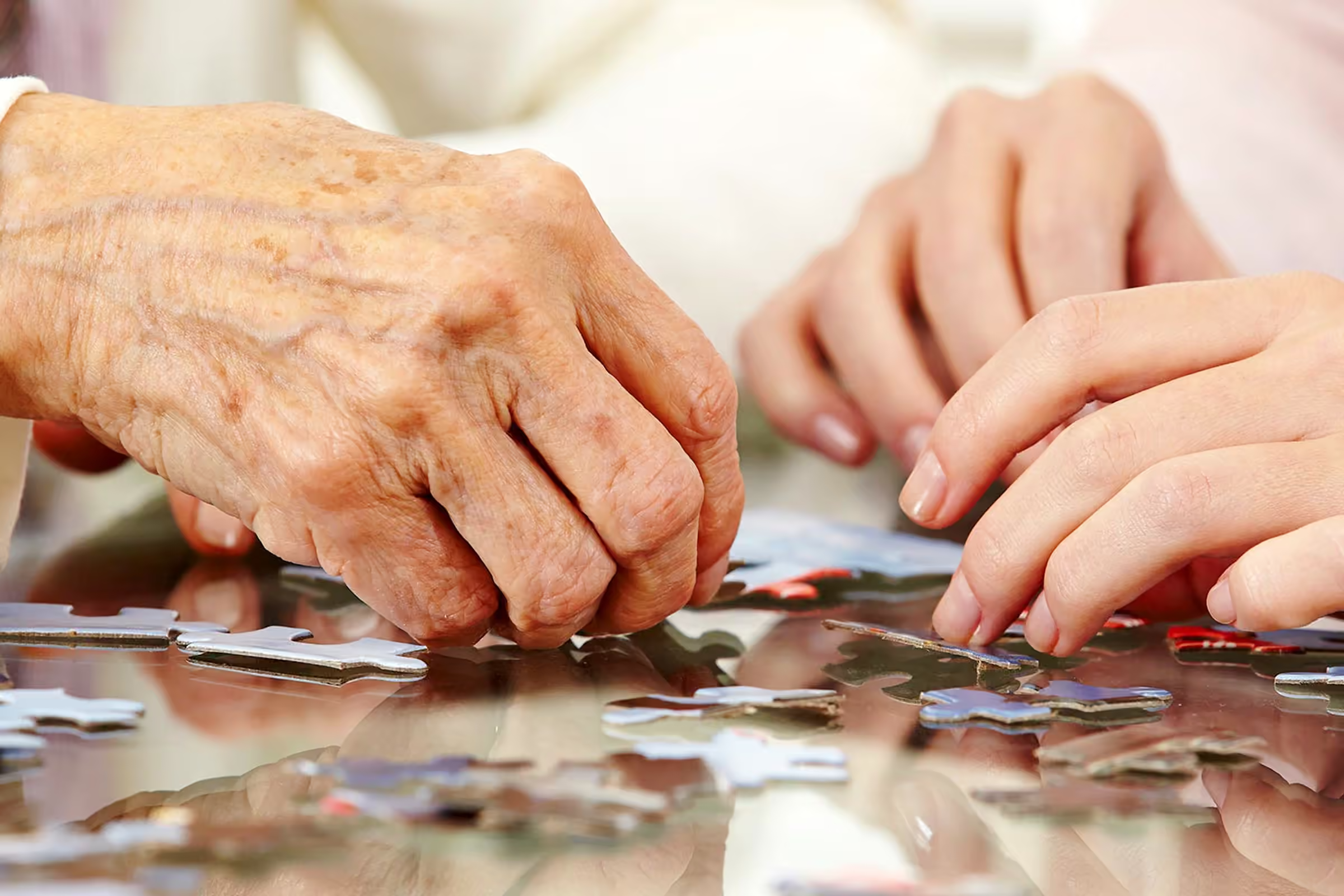
Supporting Caregivers Through a Long Illness: A Dementia Care Resource for UC San Francisco
Dementia care isn’t a moment of decision. It’s a long journey of decisions, made by caregivers under emotional and practical strain alongside clinicians and individuals living with the diagnosis. UCSF needed a digital resource that could be returned to throughout that journey — reliable enough to depend on, organized enough to find what’s needed, current enough to reflect what’s known.

The work
The Challenge: The Decisions Accumulate for Years, and the Resources Did Not
A dementia diagnosis arrives years before the worst of it, and the decisions accumulate across months and years — made by caregivers who did not sign up to manage medication regimens or legal planning around incapacity, by clinicians working at the edge of their specialty, and by people living with the diagnosis, who usually get designed out altogether. The existing landscape was scattered across advocacy sites, government resources and local directories, none of which served the whole journey, and much of it was static in a field where the science keeps moving.
The Strategy: Build for the Return Visit
Built around the relationship rather than around the subject matter: sustained, returning, audience-specific and rooted where the person actually lives.
- Three audiences, three treatments. A clinician looking for medication interaction detail, a caregiver looking for behavioral guidance and a patient trying to understand a diagnosis are not one audience, and one surface for all three serves none of them.
- Content infrastructure UCSF’s own team can keep expanding. A dementia resource that goes stale is worse than absent, because people trust it and act on it.
- Local services alongside the guidance. The caregiver’s real question is what to do next and who nearby can help.
The Outcomes: One Hub, Kept Current by the People Who Own It
A resource sized for a relationship that lasts years rather than for a single visit.
- Engagement | Audience-specific structure for caregivers, clinicians and people living with the diagnosis, instead of one surface for all three | Local support services beside the guidance, so the next question has somewhere to go
- Trust | Content infrastructure the UCSF team can keep current as the research moves | Which is the condition for the returning relationship, not a separate goal from it
The detail
Three audiences with the same condition and different questions
- Caregivers, who did not sign up for any of this. Most often family — spouses, adult children — with day-to-day responsibility for someone whose cognitive and behavioral landscape is changing in ways neither party chose. They are not professionals. They are learning medication regimens, behavioral intervention, legal planning around incapacity and the navigation of long-term care on the fly, often exhausted, often still working and parenting.
- Clinicians, often working at the edge of their specialty. Primary care doctors, geriatricians, neurologists, social workers, nurses. Dementia intersects cognitive, behavioral, pharmacological, social, legal and end-of-life systems, so even experienced clinicians need reliable reference material and routes to specialist resources. Better information here changes patient care directly.
- People living with the diagnosis, who are usually designed out. Early-stage patients are capable of meaningful digital engagement and have legitimate reasons to understand their condition, plan ahead and stay connected to their own care. Designing for their cognitive reality — without condescension, and without complexity that becomes unusable as the condition progresses — is a real responsibility rather than an accessibility checkbox.
- What unites them is the relationship, not the content. Dementia is a long-cycle condition. Diagnosis arrives years before the worst symptoms, decisions accumulate across months and years, and new questions surface as it progresses. This is not a one-time reference. It is something each audience returns to with different needs at different stages.
Why it mattered
- Information was fragmented across platforms that did not connect. A caregiver looking for one specific thing — managing sundowning, Medicare coverage for memory care, a medication interaction, local respite services — had to assemble understanding across advocacy organizations, government health resources, academic medical centers, commercial caregiving content and local directories. None served the full journey, and none helped with the question after the current one.
- Static content in a field that is not static. Research, treatment options, behavioral intervention and care practice keep moving. A platform that publishes once and does not maintain becomes misleading over time — and worse than absent, because people trust it and act on it. Most of the infrastructure underneath dementia resources could not support ongoing content evolution.
- One surface for three audiences serves none of them. A clinician looking for medication interaction detail, a caregiver looking for behavioral guidance and a patient trying to understand a diagnosis have different needs. Treating them as one audience produces a resource that frustrates all three.
How it was built
- Built around the usage pattern rather than the subject matter. Sustained, returning, audience-specific and geographically rooted — with content infrastructure UCSF’s team could continuously expand as research and best practice evolve.
- The engagement work and the trust work were not separable. The platform had to earn return visits through audience-specific structure and reliable content, and it had to be technically capable of staying current in order to keep earning them. Either half without the other decays.
- Local, because the next step usually is. Guidance alone does not answer a caregiver’s real question: what to do next, and who nearby can help. Local support services sit alongside the reference material rather than in a separate directory.
- A content system built to keep growing. Hundreds of resources — clinical guides, support services, educational tools — structured in a content model UCSF can continuously expand, with audience-specific pathways for caregivers, clinicians and people living with dementia, and an admin system their own team runs.
- Search that starts from role and place. Location-based filtering finds local dementia support services, search prioritizes the most relevant resources, and structured content relationships surface related topics — so the question after the current one already has a route.
- Video as a core educational tool, not a garnish. A featured video block highlights key dementia care topics, video sits alongside the text-based resources rather than apart from them, and the structure scales the multimedia as UCSF adds to it.
Healthcare resource hub questions
Who is a dementia care resource actually for?
Three audiences with the same condition and different questions: caregivers learning medication regimens and legal planning on the fly, clinicians working at the edge of their specialty, and people living with the diagnosis — who are usually designed out, and who in early stages have every reason to understand their condition and plan ahead. One surface treated as one audience serves none of them.
Why do health resource sites go stale, and why does it matter?
Because research, treatment and care practice keep moving while most platforms publish once and stop. A stale dementia resource is worse than absent — people trust it and act on it. UCSF’s hub is built on a content model their own team continuously expands, so staying current is an operating property rather than a promise.
How should a caregiver resource handle local services?
Beside the guidance, not in a separate directory. A caregiver’s real question is what to do next and who nearby can help — so the hub’s location-based filtering puts local dementia support services alongside the reference material, and structured content relationships put the next question one step away.
What should a dementia care resource website include?
For the UCSF build by Pare & Co: one grant-funded hub organizing hundreds of clinical guides, support services and educational resources, audience-specific pathways with role- and location-based navigation, video integrated as a core educational tool, and a platform UCSF keeps expanding as the research moves.
Client leadership
Jack Hartman
Jack Hartman’s specialty is audience experience at institutional scale. He has led resource platforms for people arriving exhausted and needing one specific thing.