Merging Two Race Brands Before the Season Opened: A Site Consolidation for Supertri
Supertri’s pro league and its mass-participation races lived on two sites with two content platforms behind them. The season and the license renewal set the deadline for becoming one.

The work
The Challenge: One Brand on Two Sites, With the Season Approaching
Supertri is a professional short-course triathlon league and, increasingly, a family of mass-participation races: eight events and some thirty thousand athletes across North America and Europe, including two of the five largest triathlons in the world. The brand had already unified, and the websites were the next step. The pro league and the age-group races ran on two separate sites with two separate Contentful spaces behind them, double the content operation for one marketing team, with the second license renewing on June 1. The race calendar set the other bound: live weeks before the season’s first major start line in Austin, or wait a year.
Two deadlines, one direction. Become one site, fast, with the registration journeys the season depends on intact.
The Strategy: Consolidating Two Sites Into One Contentful Space
Consolidate onto what already worked, before the season’s next race.
- A merge, not a replatform. The mass-participation content models were mapped into the pro site’s Contentful space behind the existing Gatsby front end, validations repaired along the way and the second space emptied.
- Development-driven under deadline. Port what the audiences already used, reuse existing components and ship, so improvements come from real post-launch behavior.
- Cities as conversion microsites. Every host city at its own path with its own event navigation, distances, countdowns and registration routes, because a city page’s job is a signup.
- Manage the scope, not the date. Legacy team pages, the paused esports property and site search waited for a later phase; four sprints ran architecture to DNS cutover.
The Outcomes: One Site and One License Before the Season Opened
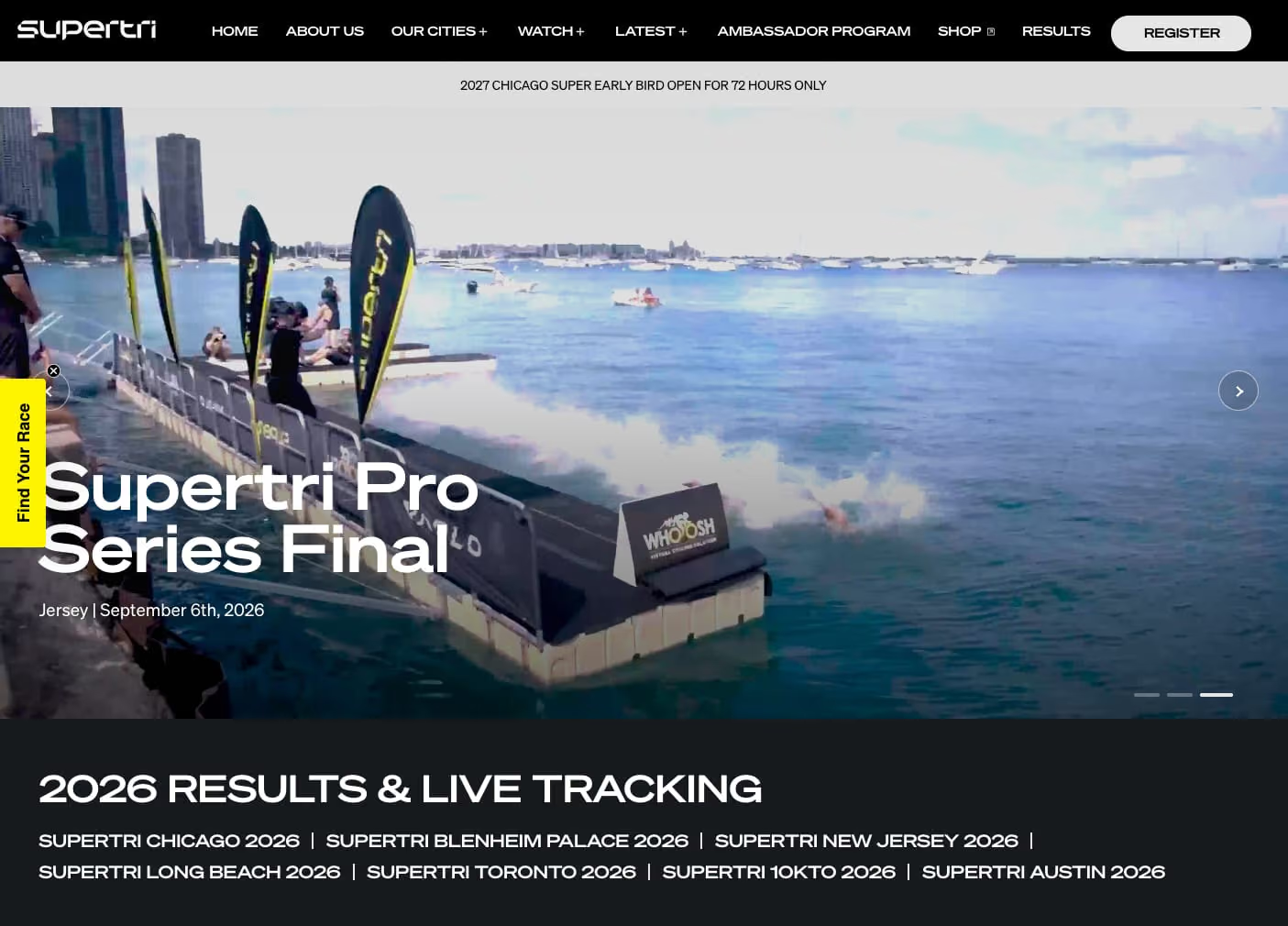
The consolidated supertri.com launched ahead of the season’s first major race in Austin, with every host city’s pages audited and republished within days of cutover. Registration journeys for eight events now start on one site, and each city page is built to convert.
The duplicate Contentful license was retired ahead of its renewal date: one platform to license, one to govern, one to train new editors on. And the brand reads as one — an athlete moving between the pro broadcast and their own city’s race stays inside one navigation and one design, so “I’m doing Supertri Chicago” works the way the brand needs it to.
The detail
Why it mattered
- One brand, ready for one site. Supertri had unified its name: the pro league and the “By Supertri” age-group races were one brand to the athlete, and the websites were the next step. supertri.com served the pros while a separate site served the mass-participation events, each with its own navigation and its own content platform behind it.
- Two content platforms, one bill each. Behind the two sites sat two separate Contentful spaces: twice the content operations for one marketing team, and a second license doing work one space could do, with its renewal date approaching.
- A calendar that does not wait. The portfolio spans eight events and some thirty thousand athletes across two continents. The merge had to land weeks before the first big start line of the season, or wait a year.
- An agency transition on top. The engagement itself had just crossed from Adapt into Pare as the two firms combined, same core team under a new name, so the season’s first delivery was also the relationship’s first under the new roof.
The call and the build
- Merge onto the platform that worked. One Contentful space and one Gatsby front end, kept. The mass-participation content models were mapped into the pro site’s space, validations repaired along the way and the second space emptied ahead of its renewal.
- Build first, validate with data after. A deliberately development-driven approach: port what the audiences already used, reuse existing components and get it live, so improvements could come later from real behavior.
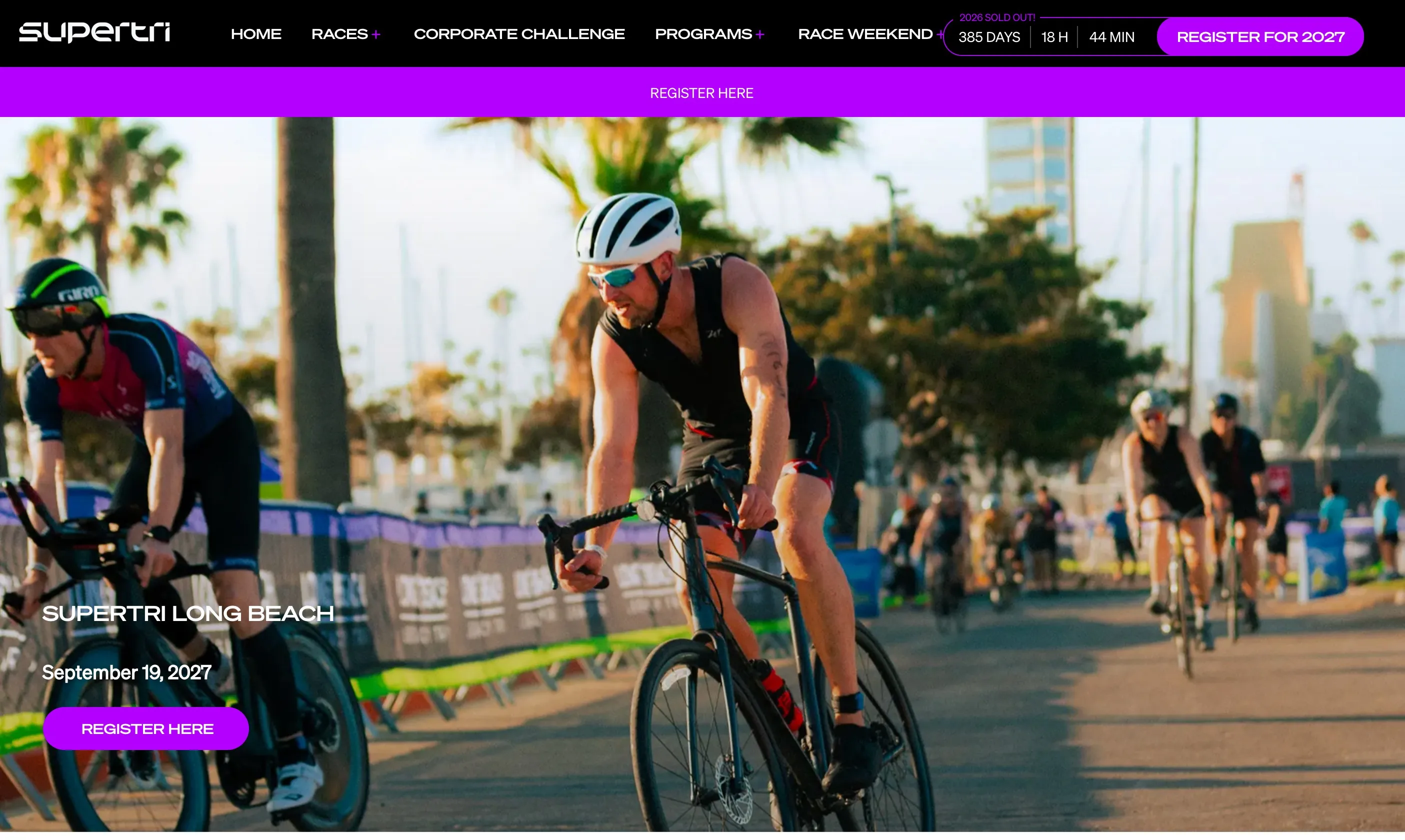
- Cities as microsites, conversion as the job. Each host city, from Long Beach and Chicago to Toulouse and Blenheim Palace, lives at its own path with its own event navigation, race distances, countdowns and registration routes, because a city page’s job is a signup.
- Manage the scope, not the date. Features the merged audience didn’t need, such as legacy team pages, the paused esports property and search, waited for a later phase. Four two-week sprints ran from architecture to cutover, with the DNS switch inside the fourth.
What moved
- One site before the first gun. The consolidated supertri.com launched ahead of the Austin race in late May, with every host city’s pages audited and republished within days of cutover.
- The second license retired ahead of renewal. One platform to license, one to govern, one to train new editors on.
- The brand reads as one. An athlete moving between the pro broadcast and their own city’s race now stays inside one navigation and one design. “I’m doing Supertri Chicago” works the way the brand needs it to.
- A platform with a next chapter. Post-launch, the work turned to what the unified foundation makes possible, from a logged-in athlete experience to a deeper rebuild.
Website consolidation questions
Can two websites merge into one Contentful space?
Yes. Supertri’s mass-participation content models were mapped into the pro site’s existing space, validations were repaired along the way and the second space was emptied ahead of its renewal date. The existing Gatsby front end stayed, which made this a merge and kept the risk of a replatform out of the season.
How long does a website consolidation take?
Supertri’s ran four two-week sprints from architecture to DNS cutover, landing ahead of the season’s first major race. The date never moved because the scope did: legacy team pages, a paused esports property and site search stayed behind while every registration journey shipped.
Should you replatform or consolidate onto an existing site?
Consolidate onto what already works when the platform is sound and the deadline is real. Supertri kept its Contentful space and Gatsby front end, moved the second site’s content in and left the deeper rebuild for the unified platform’s next chapter. The duplicate license retired ahead of renewal either way.
How do multi-event sports brands run one website for every race?
As city microsites on one platform. Each host city lives at its own path with its own event navigation, race distances, countdowns and registration routes, while the pro league and every race share one navigation, one design and one editorial operation.
Client leadership

Doug Sisko
Doug Sisko’s specialty is growth and conversion strategy. He has led brand merges timed to a season, where the audience has to arrive at one place.