Launching in Seven Weeks, Then Building to Last: A Two-Phase Platform for Rare
Rare had a way for ordinary people to fund climate projects and no category to launch it into. Catch Carbon went public in seven weeks, then came back as infrastructure — rebuilt headless once the demand was proven.

The work
The Challenge: A Marketplace With No Pattern to Copy
Rare had spent four decades changing behavior for conservation outcomes across 60 countries, and Catch Carbon was their attempt at something the voluntary carbon market had not managed: a way for an ordinary person, not a corporate sustainability office, to fund climate projects and understand what they had funded. There was no pattern to copy.
The Strategy: Speed First, Infrastructure After the Evidence
Ran it as two engagements in sequence, and the order is the whole argument.
- Phase one was speed. Public in seven weeks — journey mapping the shift from curiosity to confidence, aggregated project data so a buyer saw cumulative effect, and Collections so several projects could be backed together.
- Phase two was infrastructure, and it began only once demand for the concept was proven. Contentful and React, decoupled, so Rare could change messaging and run campaigns without booking engineering time.
- The second phase built on the first. None of the early work was discarded, and the people already using the product still recognized it.
The Outcomes: A Category Got Its Convention in Seven Weeks
A category with no convention got one, in under three months.
- Engagement | Public in seven weeks | Cumulative effect and Collections, so a buyer saw more than isolated listings
- Trust | Every project describing itself the same way | A design system keeping credibility and accessibility consistent from the explainer pages through checkout
- Growth | Rare could test, revise and expand without a new engagement | Infrastructure committed once the demand was proven
The detail
Why there was nothing to copy
- The transaction had no convention. More than twenty comparable platforms were reviewed, from emerging carbon exchanges through to Kickstarter and Kiva, and none had established a pattern for this. Catch Carbon would have to set its own.
- The obstacle was comprehension, not intent. Carbon offsets are one of the few direct routes an individual has into climate action, and most people cannot say what one is, whether it works or how to buy one without being taken. A marketplace that fails those three questions does not convert, however good the underlying projects are.
- Disposable or late, and neither was acceptable. That left Rare in the position every organization in this sector recognizes: build something quick that would be thrown away, or commit to something durable and arrive after a market that might not wait.
How the two phases worked
- Phase one bought the answer to a question. Research, experience design and build, public in seven weeks. The strategy work went into trust and comprehension: journey mapping the shift from curiosity to confidence, aggregating project data so a buyer saw cumulative effect across projects, standardizing how every project described itself, and introducing Collections so several projects could be backed together.
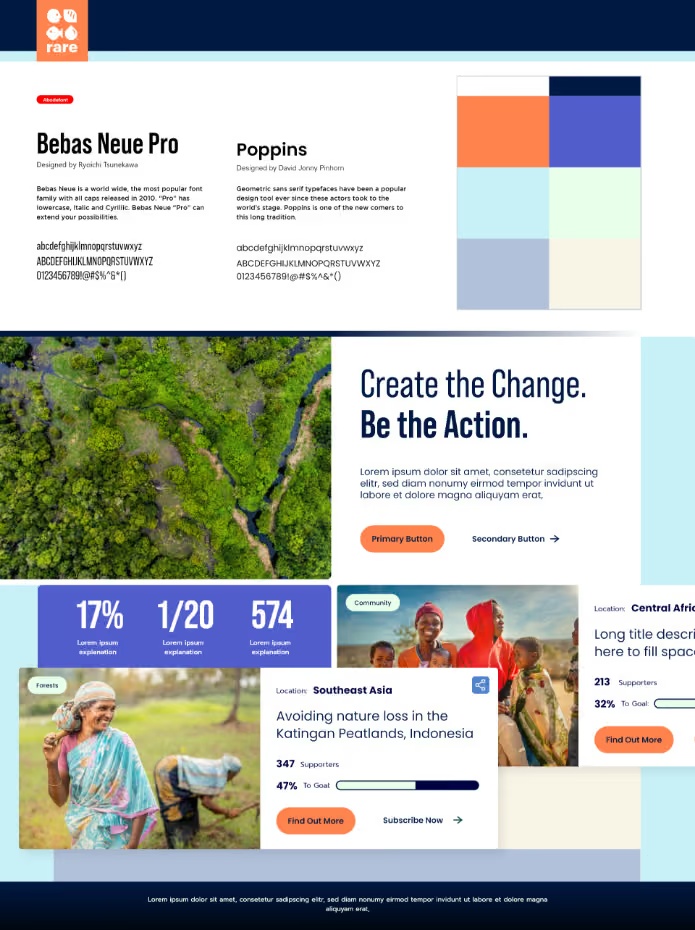
- A design language agreed while the API was still moving. A workshop and style tiles settled the visual system quickly, so design was not waiting on a backend that was still being tested.
- Phase two started only once the demand was proven. Contentful for content and React for the front end, decoupled, so Rare’s own people could change messaging, run campaigns and adjust the flow without booking engineering time. A design system kept reliability, credibility and accessibility consistent through every component, from the explanatory pages to the checkout.
- The backend was extended, not replaced. Rare’s existing systems were extended to meet the new front end, working alongside their technical staff to keep the data flowing and the operation steady through the change.
What the sequence proved
- Nothing from the first phase was discarded. Because the second engagement built on what the first had established, the early work became the foundation — and the people who had already used the product still recognized it.
- Infrastructure was committed after the evidence. The order is the whole argument. Speed first bought a real answer about what people needed; durability second meant that answer was built on rather than guessed at.
Two-phase platform launch questions
How fast can a new platform concept reach the public?
Catch Carbon went public seven weeks after kickoff — research, experience design and build included. The strategy work went into trust and comprehension: journey mapping the shift from curiosity to confidence, aggregating project data so a buyer saw cumulative effect, and Collections that bundled projects together.
When should infrastructure investment wait?
Until demand is no longer a hypothesis. Rare faced the trade-off every organization in this sector recognizes — build something quick that gets thrown away, or commit to something durable and arrive late. Sequencing the engagement in two phases meant the infrastructure was committed after the evidence was in.
Does a fast first version have to be thrown away?
Not if the second phase builds on it. Catch Carbon’s rebuild on Contentful and React kept what the launch had established — the people who had already used the product still recognized it — so the early work became the foundation.
How do you design a marketplace no one has built before?
Start by proving there is no pattern. More than twenty comparable platforms were reviewed, from emerging carbon exchanges to Kickstarter and Kiva, and none had established a convention for this transaction — so Catch Carbon’s design set its own, with standardized project descriptions, aggregate impact and a design language agreed through style tiles while the API was still moving.
Client leadership

Doug Sisko
Doug Sisko’s specialty is growth and conversion strategy. He has led launches staged so the audience arrives before the platform is finished.