
Moving to a Platform Built for Structure: A Contentful Migration for LinkSquares
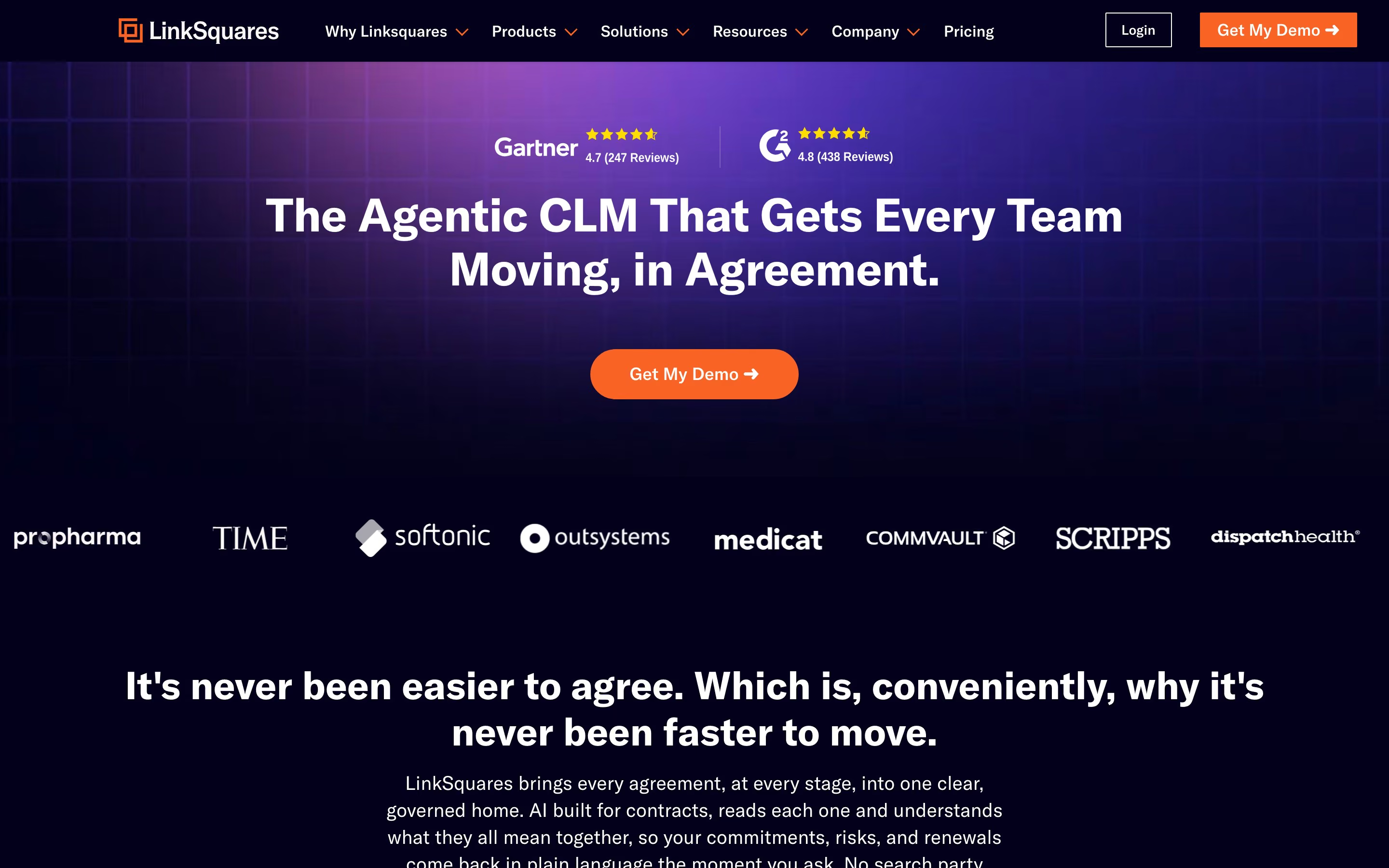
LinkSquares sells software that turns contracts into structured, queryable data. Their own website held its content in a WordPress plugin they had written themselves. We moved it to Contentful, where their content became structured data too.

The work
The Challenge: The Content Model Had Quietly Become Code
LinkSquares has built AI contract and legal document analytics since 2015, in a category where the document is the product and the buyers are legal teams who read closely for a living. Their own website ran on WordPress — custom theme, and a custom-post-types plugin the company had written to hold the content structures the platform did not give it. Nothing was broken. What had happened is that the model had quietly become code, and the company was heading into a stage of growth that would ask more of the site than the arrangement could give.
The Strategy: Move the Content to a Platform Whose Native Unit Is Structure
Move the content into a platform whose native unit is structure.
- Contentful via the Kickstart program, so the migration ran a defined path on a defined schedule.
- A Next.js front end, decoupling delivery from storage so the same content can serve more than one surface.
- Content migration treated as the hard part, because it is where a clean model meets years of pages written against a different one.
- The address space preserved, section for section, on a site where organic search is a lead source.
The Outcomes: Structured Content for a Company That Sells It
Structured content for a company that sells structured content.
- Growth | Off WordPress entirely, onto a platform sized for the next stage rather than the last one | Top-level URL structure brought through the migration intact
- Intelligence | Content models native to the platform, with no bespoke plugin to maintain | Still running on Contentful and Next.js in August 2026, nearly three years on
The detail
Why it mattered
- The content model had outgrown the platform, one plugin at a time. The site ran on WordPress with a custom theme and a bespoke custom-post-types plugin the company had written for itself. That is what running out of native model looks like from outside — the structure a growing marketing site needs had become code someone had to maintain.
- A contract analytics company was storing its own content unstructured. LinkSquares sells a product whose whole premise is that documents become queryable data. Their own content sat in page templates, reachable one way, on one surface. The replatform applied the product’s own premise to the website: structure the content, then use it anywhere.
- Growth was the trigger. Nothing was down. The replatform was scoped to support the next stage of the company’s growth, which is the harder version of the case to make internally — there is no incident to point at, only a ceiling that gets closer.
The call and the build
- Contentful, through the Kickstart program. A structured migration path — the framing that makes a move like this schedulable against a marketing calendar.
- Project management, development leadership, content migration. The three things a replatform actually fails on. The engagement led all three — the content is the part everyone underestimates, because it is where a clean model meets years of pages written against a different one.
- A decoupled front end. Next.js over the Contentful API, so the delivery layer stopped being the same thing as the content store — the separation that lets the same content serve a marketing site, a resource center and whatever the company builds next.
- The URL structure was kept. Products, solutions, integrations, resources, events, customers — the top-level sections came through the move intact. On a site whose organic search is a lead source, preserving the address space is the difference between a replatform and a reset.
Where it stands
- Off WordPress entirely. Public captures show WordPress in January 2023, still WordPress that June and no WordPress fingerprints at all a year later.
- Still on the platform it moved to. Checked in August 2026: linksquares.com serves Contentful content through a Next.js front end, nearly three years after the migration.
WordPress to Contentful migration questions
When has a site outgrown WordPress?
When the content model becomes code. LinkSquares was running a custom theme and a bespoke custom-post-types plugin written to house structures the native model did not offer — the point where structure a growing marketing site needs is code someone must maintain rather than configuration anyone can change.
Does a replatform have to wait for something to break?
No — and at LinkSquares nothing was broken. The move was scoped to support the next stage of the company’s growth, which is the harder version of the case to make internally: no incident to point at, only a ceiling that gets closer.
How does a migration protect organic search?
By preserving the address space. LinkSquares’ top-level sections — products, solutions, integrations, resources, events, customers — came through the move intact, and on a site where organic search is a lead source, that is the difference between a replatform and a reset.
Is moving from WordPress to a headless CMS worth it?
For the LinkSquares migration by Pare & Co: off WordPress entirely and onto Contentful behind a Next.js front end, content models native to the platform with no bespoke plugin to maintain, the URL structure intact — and the site still running on that platform in August 2026, nearly three years on.
Client leadership

Doug Sisko
Doug Sisko works on customer acquisition and the digital barriers in front of it. He has led migrations for SaaS companies whose publishing pace had become the constraint on pipeline.