
Expanding a Design System From the Inside: A System Extension for Fidelity Investments
Fidelity’s design team had a feeling before it had a reason. Something needed to change. The design system wasn’t broken — but it was the constraint.

The work
The Challenge: The Design System Was Not Broken — It Was the Ceiling
Fidelity runs one of the largest editorial operations in financial services, and its design system was not broken — it simply had no vocabulary for the editorial directions the work was now asking for, so designers reached for what the system surfaced and the work settled into the pieces available.
The Strategy: Expand the System From the Inside
Expanded the system from the inside rather than replacing it from the outside.
- Looked outside the sector. Editorial design is a publishing problem; the strongest patterns for grouping, clustering and sequencing sit in other industries, and a cohort analysis brought back structure the existing brand standards could absorb.
- Built to the governance already in place. Typography, spacing, color, accessibility and approval workflow, so adoption was an extension of the platform rather than a deviation from it.
- Handed production to their team. Annotated specs, flexibility logic, governance notes and scalability expectations they could run with on their own.
The Outcomes: A Wider Vocabulary Inside the Same Governance
A design system that makes the right thing the easy thing again — because its definition of “right” got wider.
- Intelligence | A wider editorial vocabulary inside the same governance | New directions ship on the existing cadence, by the existing team
- Trust | Governance, accessibility and brand integrity kept intact | No governance debt left behind to clean up
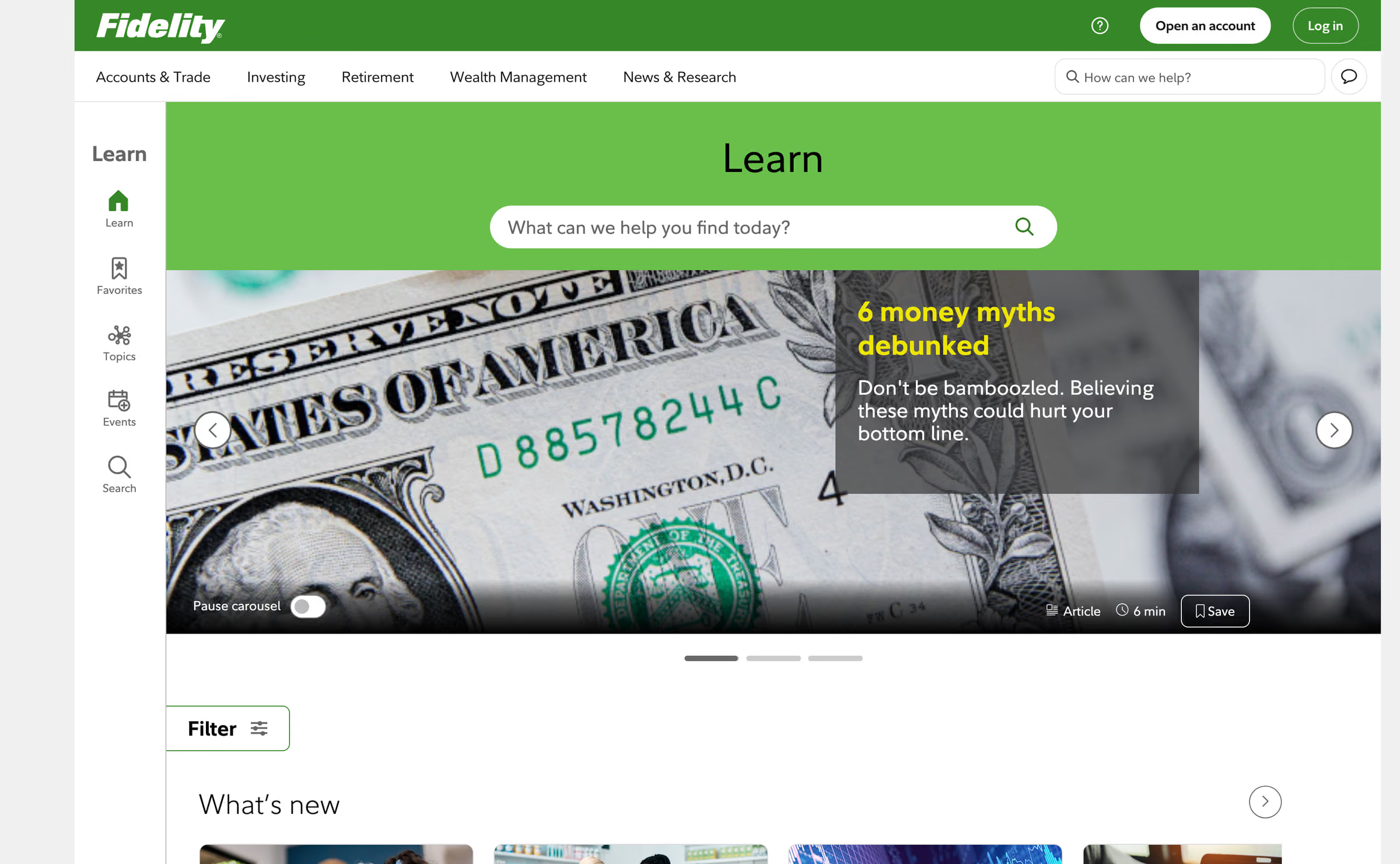
The detail
Why it mattered
- The system was not broken; its vocabulary was. The design system was doing what design systems do — enforcing consistency, scaling components, governing how the brand shows up across products. None of that was failing. New editorial directions simply were not materializing.
- The components answered an older question. They were optimized for the editorial patterns the team needed when the system was built. Dynamic grouping by topic and investor interest, larger structured modules, layouts that compose into more than a list of components — none of that was in the kit.
- So designers reached for what the system surfaced. Layouts repeated and storytelling stayed flat, because the familiar patterns were the ones the system made easy. The work settled into the pieces available.
- Replacing it would have cost the parts that worked. Governance, accessibility, brand integrity and scalability across products were all doing real work. Throwing out the system to solve a problem that lived in its vocabulary would have traded those away for nothing.
How it was built
- Look outside the sector. Editorial design is a publishing problem rather than a financial-services one. A cohort analysis of leading editorial experiences broke down how they group related content, structure topic clusters, sequence narrative and guide a reader through dense material. What came back was a set of structural patterns the existing brand standards could absorb, not a moodboard.
- Prototype inside their own files. The work moved into Fidelity’s Figma: layouts that group content dynamically by topic, trend and investor interest; larger, more deliberate modules in place of fragmented small ones; component logic flexible enough to adapt across content types without spawning a new component for every variation.
- Built to the governance already in place. Typography, spacing, color, accessibility and approval workflow, so adoption was an extension of the platform rather than a deviation from it.
- Their team owned production. Fidelity took the components into code and integrated them into the system. The handoff was built around that — annotated specs, flexibility logic for how components flex across use cases, governance notes and scalability expectations they could run with on their own.
What changed
- The kit stopped being the ceiling. New editorial directions can be designed and shipped inside the existing governance, on the existing development cadence, by the existing team — with no governance debt to clean up afterwards.
- Readers get paths instead of pages. Topic-driven routes replace fragmented page experiences, connected ideas surface together, and the journey from an insight to a reader’s next action has fewer dead ends.
- Sitecore
- Storybook
Enterprise design system questions
What makes a design system feel restrictive?
Usually not failure — vocabulary. Fidelity’s system was enforcing consistency, scaling components and governing the brand exactly as designed; it simply had no vocabulary for the editorial directions the work was asking for, so designers reached for what the system surfaced and layouts repeated. The kit had quietly become the ceiling.
Should you replace a design system that feels limiting?
Not if its governance is doing real work. Replacing Fidelity’s system would have traded away accessibility, brand integrity and scalability to solve a problem that lived in its vocabulary. The expansion happened from the inside instead: new patterns absorbed into the existing standards, with no governance debt left behind.
How should editorial content be organized at enterprise scale?
Learn from publishing, not from the sector. A cohort analysis of leading editorial experiences broke down how they group related content, structure topic clusters and sequence a reader through dense material — and returned structural patterns Fidelity’s brand standards could absorb: dynamic grouping by topic and investor interest, larger deliberate modules, component logic that flexes without spawning a variant every time.
What does a design-system handoff include?
Whatever lets the internal team take it forward alone. Fidelity took the components into code and integrated them into the system; the handoff was built around that — annotated specs, flexibility logic for how components adapt across use cases, governance notes and scalability expectations.
How do you expand a design system without breaking governance?
For the Fidelity Investments engagement by Pare & Co: a wider editorial vocabulary inside the same governance, new directions shipping on the existing cadence by the existing team, and readers getting topic-driven paths instead of fragmented pages — with governance, accessibility and brand integrity kept intact throughout.
Client leadership

Christopher Murray
Founder & CEOChris Murray founded Pare & Co in 2007 and rebuilt the firm in 2026. He has led the firm’s work with Fidelity, where the brief was to widen a design system without loosening the governance around it.