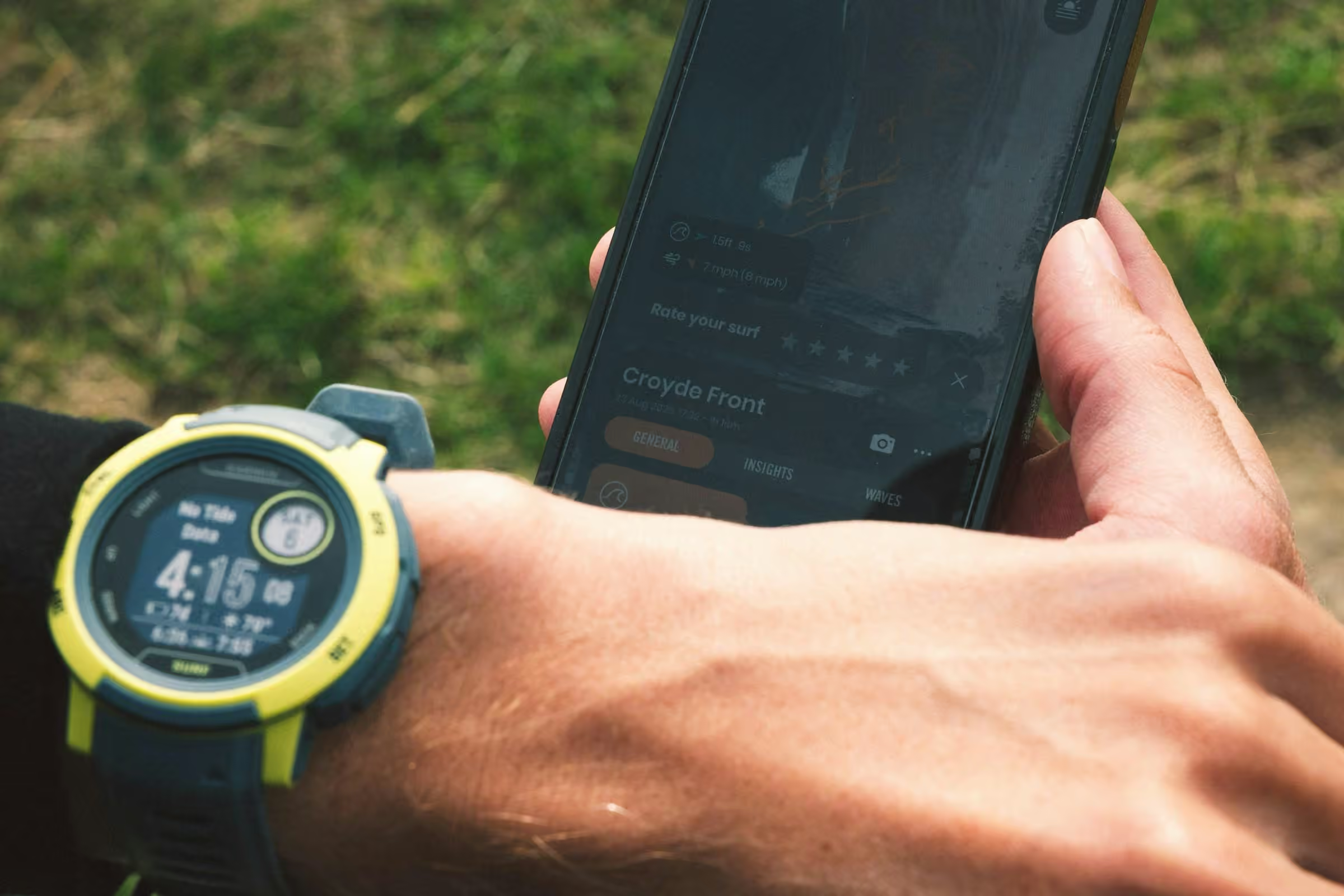
Turning a Smartwatch Into a Continuous Stress Sensor: A Wearable Integration for Optivio
Optivio detects stress from wearable data, which means the measurement has to happen while no one is thinking about it. The first integration collected data only when the watch was awake. The second collects it whether anyone opens an app or not.
The work
The Challenge: The Measurement Has to Happen While No One Is Looking
Optivio detects stress from wearable data and smartphone interaction, and turns it into training a person can act on. The measurement is the product.
That puts an unusual demand on the integration underneath it. Stress is not something a person pauses to log, so the data has to arrive without anyone deciding to send it. Collection that depends on a wearer opening an app measures the moments they thought to check, which are not the moments the platform is interested in.
The Strategy: Build It Twice, and Say So
Two applications, and then a rebuild of one of them once the first approach met its limit.
- Two apps on the Garmin Standard SDK. One for the Garmin smartwatch, one for Android, with a broadcast receiver so either device could launch the other remotely.
- The standby gap. That arrangement worked while the watch was awake and returned nothing while it was in standby, which is where a smartwatch spends most of the day.
- A second Android app on the Garmin Companion SDK. Built for a phone maintaining a connection to a watch no one is touching, which is the condition this product runs in.
The Outcomes: A Sensor, Not an App Someone Has to Run
Data that arrives whether anyone is paying attention or not.
- Intelligence | Readings obtained with no intervention at the smartwatch | Logged and downloaded to the phone over the watch’s background connection
The detail
Why the first integration was not enough
- The thing being measured happens when no one is looking. Stress is not a state a person stops to record. A platform that infers it from wearable data has to collect that data continuously, which means collection cannot depend on someone remembering to open something.
- The first build worked, and only while the watch was awake. Two apps were developed on the Garmin Standard SDK, one for the smartwatch and one for Android, with a broadcast receiver letting either device launch the other remotely. It worked. No data was available while the Garmin device sat in standby.
- Standby is not an edge case. A smartwatch spends most of its day in standby. An integration that goes quiet there is quiet for most of the measurement window it exists to cover.
The call and the build
- A second Android app, on the Companion SDK. Rather than working around the standby gap, the Android application was rebuilt on the Garmin Companion SDK, which is designed for exactly this: a phone maintaining a connection to a watch that is not being used.
- Collection with no intervention at the wrist. The rebuilt approach obtains the data without any intervention at the smartwatch. Nothing has to be launched, woken or tapped for the record to continue.
- The phone as the place the data lands. Readings are logged and downloaded to the phone over the smartwatch’s background connection, so the record lands on the device people already have with them.
What it left behind
- A sensor rather than an app someone has to run. The difference between the two builds is whether the product measures continuously or only when prompted. For a platform whose whole claim is detecting stress from subtle changes in wearable data, that is the difference between working and not.
Wearable health data integration questions
How do wearables collect health data continuously?
By not depending on the wearer. Stress is not a state a person stops to record, so a platform that infers it from wearable data has to collect whether anyone opens an app or not. For Optivio, readings are logged and downloaded to the phone over the smartwatch’s background connection — nothing has to be launched, woken or tapped.
What is the difference between the Garmin Standard SDK and the Companion SDK?
The Standard SDK supports apps that run while the watch is in use — Optivio’s first integration paired a watch app and an Android app that could launch each other, and it went quiet whenever the watch sat in standby. The Companion SDK is built for the opposite condition: a phone maintaining a connection to a watch that is not being used.
Why does standby matter for wearable data collection?
Because a smartwatch spends most of its day there. An integration that collects only while the watch is awake is quiet for most of the measurement window it exists to cover — and for a stress-detection platform, the unprompted hours are the ones that matter.
Can a smartwatch collect health data without the wearer doing anything?
Yes. For the Optivio integration by Pare & Co: data collection with no intervention at the smartwatch, readings logged and downloaded to the phone in the background, and a product that measures continuously instead of only when prompted — the difference between a sensor and an app someone has to remember to run.
Client leadership

Doug Sisko
Doug Sisko’s specialty is growth and conversion strategy. He has led product work where engagement is the number that decides whether the thing survives.