
Unifying Five Legal Tech Brands: One Content Architecture for 8am
8am — the professional business platform formerly known as AffiniPay — spent twenty years building five legal and financial tech brands on five different content platforms. The rebrand needed one architecture underneath all of them, without breaking the brands on top.

The work
“It’s truly a night and day difference working with this new flow … It’s fantastic.”
The Challenge: Five Brands, Five Platforms, One Rebrand Coming
8am’s five brands — MyCase, LawPay, CasePeer, DocketWise, CPACharge — serve over 260,000 regulated professionals and are approved by 175+ bar and professional associations, and they had been built over twenty years on five different content platforms. The rebrand needed one architecture underneath all of them: five brand identities, five publishing workflows, five marketing teams and two decades of content sediment, on a single coordinated platform that could move faster than any of them could individually.
The Strategy: One Content Architecture, With Every Brand Intact on Top
One structured content architecture on Contentful, with brand-specific surfaces composing from a common spine.
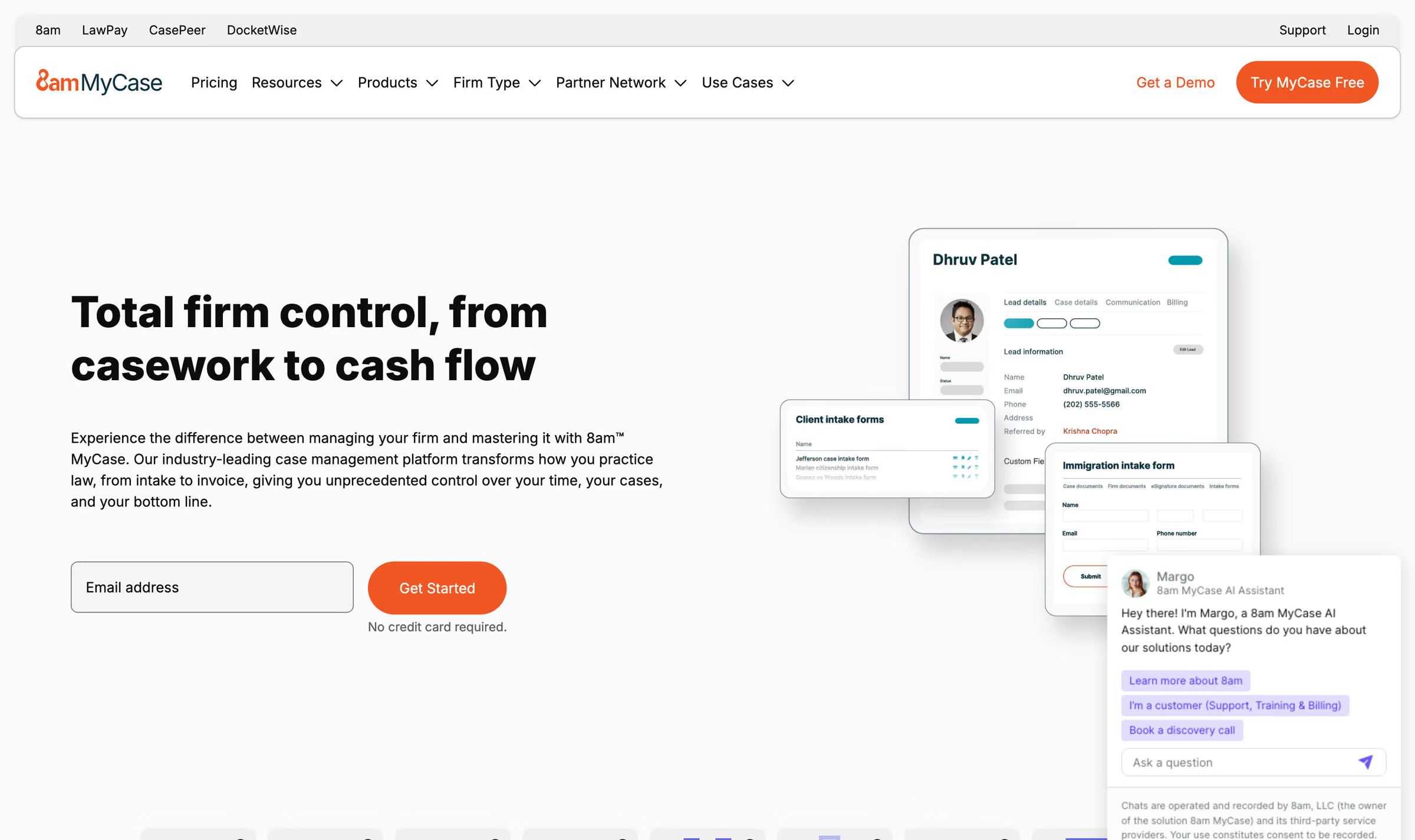
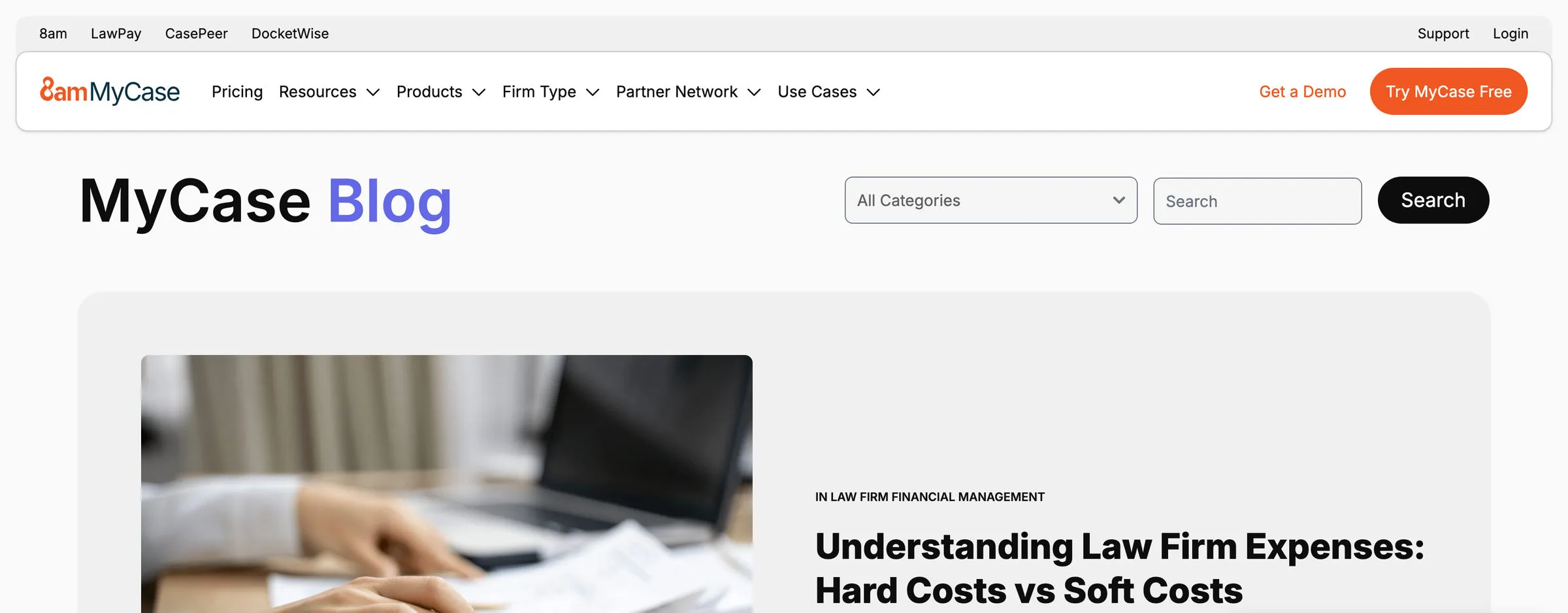
- MyCase first, as the reference implementation. The largest of the five, migrated deliberately to template the other four — 166+ pages, 400+ blog posts, 4,700+ media files, and an Atomic Design System the rest would inherit.
- Modeled on the editorial surface, not the old page tree. Blogs, guides, webinars, press releases, videos and landing pages as content types, with Marketo forms modeled as content rather than bolted on as plugins.
- Brand integrity governed at the asset layer. One shared asset library across all five brands, so nothing is policed at the publishing layer.
The Outcomes: Campaigns in Hours Where They Took Days
Five teams in one system, and five brands that still look like themselves.
- Growth | Campaigns composed once and adapted rather than rebuilt five times, shipping in hours instead of days | 143+ SEO-critical redirects preserved, so twenty years of ranking authority survived the migration
- Intelligence | One asset library, so no brand is ever in market on an old logo | Personalization, localization and AI readiness are extensions of the platform now rather than new projects
The detail
Why it mattered
- Five brands on five different stacks. WordPress, HubSpot, custom page builders, and the long tail of plugins and templates that accumulate in any platform live long enough. Each brand had its own publishing rhythm, its own asset library, its own redirects and SEO debt, its own design conventions, and its own muscle memory in the marketing team running it. Not unusual after twenty years of growth across acquisitions; not stable as the basis for a unified rebrand.
- Cross-brand campaigns ran at the speed of the slowest CMS. With manual coordination between teams who were not using the same tools.
- Plugin dependencies were spending the capacity that campaigns needed. Maintenance overhead, security exposure and brittle update paths, five times over.
- Thousands of scattered assets meant no source of truth. Duplicated work across brand libraries, and inconsistent versions of the same brand asset in market simultaneously — which for a company serving regulated professionals is a trust problem before it is an efficiency one.
- Two decades of SEO history was either migrated carefully or lost. Pages, posts and URL changes accumulated across twenty years are a substantial asset. There was no middle option.
- The audience is regulated, and so is the work it does. Five brands serving over 260,000 professionals, approved by 175+ bar and professional associations. Brand consistency, content reliability and operational integrity are conditions of trust that get checked before a single feature is evaluated.
How it was built
- One structured platform, brand-specific surfaces composing from a common spine. Shared governance and shared assets on Contentful, with each brand’s identity intact on top rather than flattened into a single house style.
- MyCase first, deliberately, as the reference implementation. The largest of the five, migrated to template the other four: 166+ pages, 400+ blog posts, 4,700+ media files. The scale is not the point — what the architecture became in the process is.
- Modeled on the editorial surface, not on the old page conventions. Blogs, guides, webinars, press releases, videos and landing pages as content types, rather than a one-for-one replication of WordPress page structures. An Atomic Design System standardized components across the site and became the inheritance pattern for the four migrations to follow.
- SEO continuity, because the alternative sets marketing back years. 143+ SEO-critical redirects preserved through the migration. Losing twenty years of organic ranking authority would also have signaled instability to the audience finding 8am brands through search.
- Marketo modeled as content, not bolted on as a plugin. Forms are governed as content and reused across brands without duplication.
- Frontify as the shared asset spine. One asset library powering all five brands. No duplicated files across brand teams, and no outdated logo or old brand color in market while the new one rolls out. Brand integrity governed at the asset layer instead of policed at the publishing layer.
What moved
- Marketing teams ship in hours, not days. The senior designer at 8am called the new flow “truly a night and day difference”.
- Five teams collaborate inside one system with shared visibility. Reusable components mean a campaign that used to require parallel builds across five brands is composed once and adapted, not rebuilt. Time-to-publish dropped on the team’s own measurement.
- Every brand stays on the current version of every asset. The shared library removed the duplicated asset work and the possibility of two versions of a logo in market at once.
- SEO authority survived the migration intact. Which is the quiet half of the result, and the half that would have been most expensive to get wrong.
- The next thing composes onto it rather than forking off it. Personalization, localization and AI readiness are extensions of the platform now instead of new projects — and so is the next product, the next acquisition, the next brand identity.
Multi-brand content platform questions
How do you migrate five brands onto one content platform?
One brand first, as the reference implementation. MyCase — the largest of 8am’s five — migrated first: 166+ pages, 400+ blog posts and 4,700+ media files into a structured Contentful model, with an Atomic Design System that became the blueprint the other four migrations inherit. The point is not the scale; it is what the architecture became in the process.
How do you keep SEO through a CMS migration?
Treat twenty years of ranking authority as the asset it is. 8am’s migration preserved 143+ SEO-critical redirects and improved metadata governance — and structured content models double as machine-readable content for AI search visibility, so the same work serves both kinds of engine.
How do multiple brands share assets without losing their identities?
Govern the brand at the asset layer instead of policing it at the publishing layer. One Frontify library powers all five 8am brands — no duplicated files across teams, no outdated logo in market mid-rollout — while each brand’s identity stays intact on its own surfaces above the shared spine.
What are the benefits of consolidating multiple brands on one CMS?
For the 8am architecture by Pare & Co: five brands managed in one scalable platform, marketing campaigns launching in hours rather than days, time-to-publish down on the team’s own measurement, and one system where brand, marketing and digital teams work with shared visibility — a foundation built for personalization, localization and the next product rollout.
Client leadership

Doug Sisko
Doug Sisko’s specialty is growth and conversion strategy. He has led brand consolidations where the measure is what happens to demand afterwards.