Giving a Nonprofit a Roadmap It Can Run Itself: A Customer Experience Audit for Farm Fresh Rhode Island
Farm Fresh Rhode Island knew the website had problems and had no way to rank them, and no budget for a full redesign. The deliverable was an audit that told them where to start and what they could do without help.

The work
The Challenge: They Could Name the Symptoms but Not the Priority
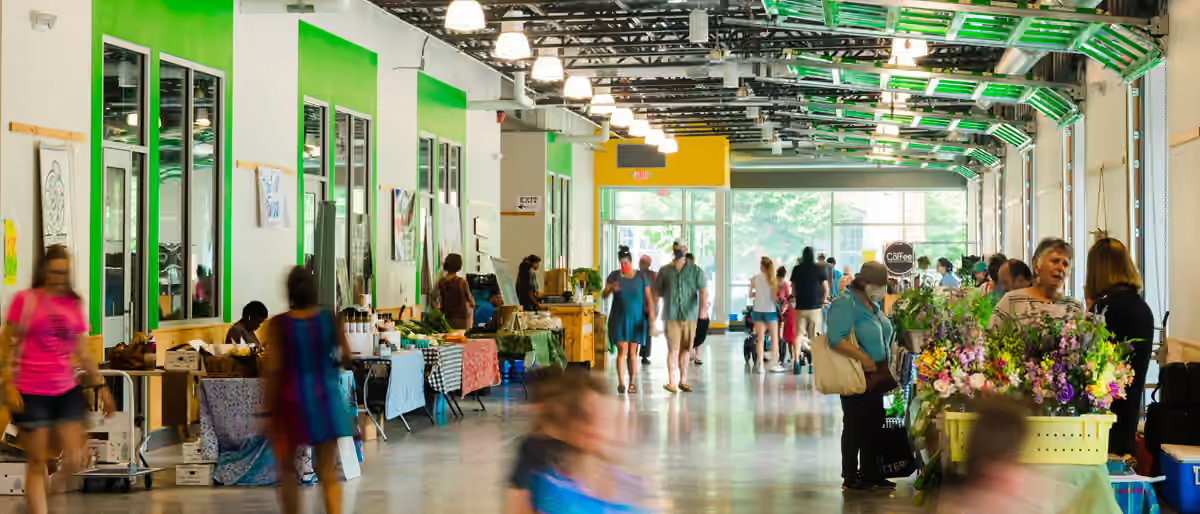
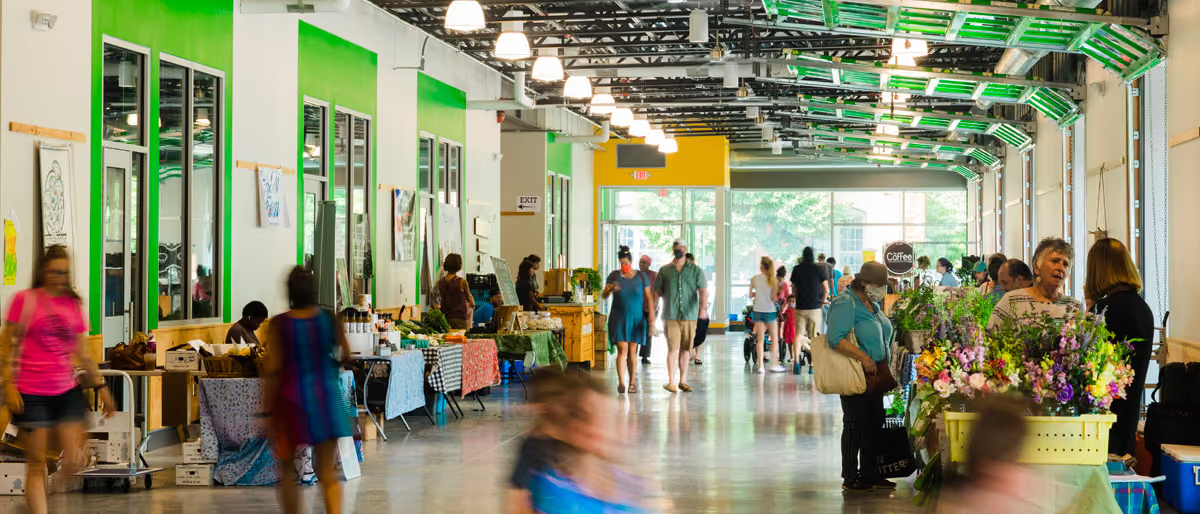
Farm Fresh Rhode Island has been building local food systems since 2004, connecting growers to the people who buy from them through farmers markets, Bonus Bucks, Hope’s Harvest and more.
The website fit that work when it was built. The programs kept growing and the structure did not, so new content went into a structure that could not fit it and began competing with everything already there. The team could see the symptoms. What they could not see was which problem to solve first, or which ones they could solve without commissioning anyone.
The Strategy: Answer the Question They Actually Had
Answer the question they actually had, which was about sequence rather than about design.
- A Customer Experience Audit. An efficient set of exercises producing a guiding star for internal work: user experience gaps, accessibility issues, and opportunities in content and navigation.
- Focused on the public site. The first touch point, and the one that decides whether anyone reaches the rest of the ecosystem.
- Accessibility scanned by machine and reviewed by hand, because each catches what the other misses.
The Outcomes: A Roadmap They Run Themselves, Already Running
- Engagement | A ranked set of improvements a small team can work through itself — already being implemented | The audit validated concerns the team had struggled with for years
- Trust | Accessibility issues found by automated scan and manual review | Findings written to be acted on independently
The detail
Why a redesign was the wrong prescription
- The structure stopped fitting the organization. Farm Fresh Rhode Island has been building local food systems since 2004, across farmers markets, Bonus Bucks, Hope’s Harvest and more. The site fit the audience when it was built. As the programs grew, new content went into a structure that could not stretch to fit it, and messages began competing with each other for the same attention.
- The team could name the symptoms and not the priority. They knew there were pain points. What they did not have was a direction: where to start, which changes would matter most and which they could handle themselves rather than commission.
- A full redesign was not the available move. What the situation called for was a small set of deliverables that established a shared understanding and a sequence of improvements, rather than an engagement sized to rebuild everything at once.
The call and the build
- A Customer Experience Audit, scoped as a product. An efficient set of exercises producing what the team could treat as a guiding star for their own initiatives: a look across the digital presence that surfaces user experience gaps, accessibility issues, and opportunities in content and navigation.
- The public site, because it is the first touch. The audit concentrated on the public-facing site rather than the mobile app in the ecosystem, on the reasoning that a stronger first impression of the brand and its value is what sends people on to the other tools.
- Accessibility found by machine and by hand. A SortSite scan and a manual pass together, which is the only way to catch both the issues a tool can see and the ones it cannot. The findings included clickable hero images without visual cues, insufficient contrast in key areas and inconsistent translation options for non-English-speaking users.
- Layout and journey findings, ranked. Tall hero images were pushing the content people came for below the fold, and farmers-market details were fragmented across pages. The roadmap recommended shorter heroes and consolidated market information — reaching key resources with minimal scrolling, and freeing space to highlight everything else.
- Deliverables a small team can act on. The accessibility audit with outlined improvements, initial user journeys and an information-architecture “North Star” to discuss internally, quick wireframes for the homepage and the farmers-market listing page, and a plan separating what they can do now from what needs help.
What it left behind
- A roadmap the organization owns. The output is a ranked set of improvements a small team can work through on its own schedule, with or without help. For an organization whose money is better spent on the mission than on a rebuild, the useful deliverable is knowing what to do next.
- And they are already using it. Farm Fresh Rhode Island began implementing the suggestions with the roadmap in hand. Their primary contact said the audit validated concerns the team already had internally — and gave a clear path on issues they had struggled with for years.
Website audit and roadmap questions
When is a UX audit better than a redesign?
When the question is sequence, not design. Farm Fresh Rhode Island knew the site had pain points but not where to start, which changes would matter most or which they could handle themselves — and a full redesign was not the available move. The audit answered exactly those questions, for a fraction of a rebuild’s cost.
What does a customer experience audit include?
For Farm Fresh Rhode Island: a SortSite accessibility audit paired with a manual review, user journeys and an information-architecture “North Star”, quick wireframes for the homepage and farmers-market listing page, and a plan separating what the team can do now from what needs help.
Why audit accessibility by machine and by hand?
Because each catches what the other misses. The automated scan surfaces the measurable issues; the manual pass caught things like clickable hero images with no visual cues and inconsistent translation options for non-English-speaking users — problems a tool cannot reliably see.
What do you get from a website UX audit?
For the Farm Fresh Rhode Island audit by Pare & Co: a ranked roadmap the organization owns and is already implementing, with their primary contact saying it validated concerns the team had internally and gave a clear path on issues they had struggled with for years.